ما هي مزايا التصنيع باستخدام الحاسب الآلي مخرطة
مؤلف: Yannis
2025-04-10

Cultivated in CNC Machine Industry for 20+ years.
Specializing in CNC Milling, Drilling, Turning, Tapping, and so on...
Self-created Brand LiSN for 10+ Years



What Is The Advantage of CNC Lathe
In the rapidly evolving landscape of modern manufacturing, CNC (Computer Numerical Control) technology has become the cornerstone of precision machining. Among the diverse range of CNC machines, CNC lathes stand out for their unparalleled capabilities. This blog delves into the significant advantages of CNC lathes, exploring how they revolutionize the production process and drive efficiency across various industries.

Unmatched Precision and Repeatability
At the heart of CNC lathes lies their ability to achieve extraordinary precision. Unlike traditional manual lathes, CNC lathes rely on pre-programmed CNC instructions, typically in G-code format. These instructions guide the machine’s servo-motors with pinpoint accuracy, enabling the creation of parts with tolerances as tight as ±0.001mm. Whether machining a delicate medical implant or a complex aerospace component, CNC lathes consistently deliver parts that meet the strictest dimensional requirements.
Moreover, the repeatability of CNC lathes is a game-changer. Once a program is set, the machine can produce identical parts over and over again with unwavering consistency. This eliminates the variability introduced by human operators in manual processes, ensuring batch after batch of high-quality products. In industries where precision and uniformity are non-negotiable, such as automotive engine component manufacturing, CNC lathes are indispensable.

Enhanced Productivity and Efficiency
CNC lathes are engineered for maximum productivity. Their automated operation allows them to run continuously, often 24/7, with minimal human intervention. Automatic tool changers integrated into many CNC lathes further boost efficiency by enabling seamless transitions between different machining operations. For instance, a CNC lathe can effortlessly switch from turning to threading to drilling on a single workpiece without the need for manual tool adjustments.
These machines also optimize production time through efficient tool paths generated by CAD/CAM software. By calculating the most direct and effective routes for cutting tools, CNC lathes reduce material removal time and minimize waste. In high-volume manufacturing scenarios, the cumulative time savings provided by CNC lathes translate into significant cost reductions and increased output.

Flexibility in Design and Production
One of the most remarkable advantages of CNC lathes is their flexibility. With a simple change of the CNC program, these machines can switch from producing one type of part to another. This adaptability makes CNC lathes ideal for both small-batch production of custom components and large-scale manufacturing runs. Whether it’s crafting a unique prototype for a new product or manufacturing thousands of identical parts for an assembly line, CNC lathes can handle the task with ease.
Furthermore, CNC lathes support complex geometries that would be challenging or impossible to achieve with manual lathes. The multi-axis capabilities of many CNC lathes allow for the machining of intricate shapes, undercuts, and contours. In industries like die and mold making, where parts with complex 3D profiles are the norm, CNC lathes offer the versatility needed to bring designs to life.

Cost Savings in the Long Run
While CNC lathes may have a higher initial investment compared to manual lathes, they yield substantial cost savings over time. Their high productivity reduces labor costs by minimizing the need for extensive operator intervention. Additionally, the precision of CNC lathes reduces the likelihood of costly errors and rework. Since parts are produced correctly the first time, manufacturers save on materials, time, and resources that would otherwise be wasted on fixing mistakes.
Moreover, the long lifespan and reliability of CNC lathes contribute to cost savings. With proper maintenance, these machines can operate efficiently for years, providing a high return on investment. In industries where production downtime is costly, the consistent performance of CNC lathes ensures uninterrupted manufacturing processes.

Integration with Modern Manufacturing Ecosystems
CNC lathes seamlessly integrate into modern manufacturing ecosystems. They can be connected to enterprise resource planning (ERP) systems, allowing for real-time monitoring of production status, inventory levels, and machine performance. This integration enables manufacturers to optimize their operations, streamline workflows, and make data-driven decisions.
Furthermore, advancements in CNC technology, such as the Internet of Things (IoT) connectivity, enable remote monitoring and predictive maintenance of CNC lathes. By collecting data on machine performance, manufacturers can identify potential issues before they escalate, reducing downtime and extending the life of the equipment.

Conclusion
The advantages of CNC lathes are clear and far-reaching. From precision and productivity to flexibility and cost savings, these machines have transformed the manufacturing industry. As technology continues to advance, CNC lathes will only become more sophisticated, further enhancing their capabilities and solidifying their position as essential tools in modern manufacturing. Whether you’re a small business looking to produce custom parts or a large corporation aiming for high-volume, high-precision manufacturing, CNC lathes offer the solutions you need to succeed.

ما هو الفرق بين دليل مخرطة مخرطة نورث كارولاينا
ما هو دليل مقابل مخرطة التصنيع باستخدام الحاسب الآلي
مقالات لها صلة
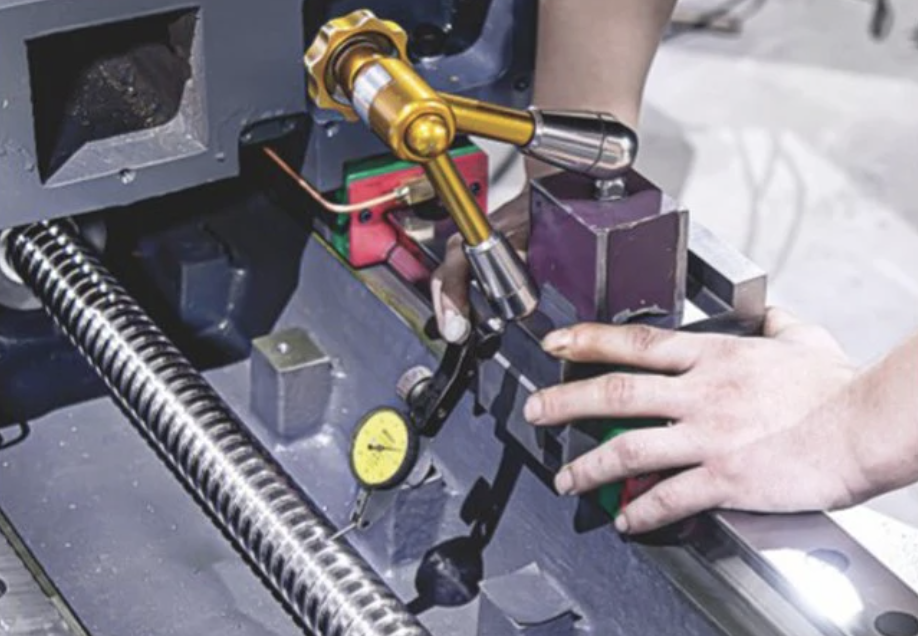
Poor surface finish, inconsistent dimensions, vibration, or an unexpected stop doesn’t always mean something is wrong with your CNC lathe. Worn tooling, poor workholding, and unsuitable cutting parameters can cause many of the same symptoms.
Common problems and solutions for CNC lathes