Definition and Working Principle of a Parallel Lathe
Definition and Working Principle of a Parallel Lathe
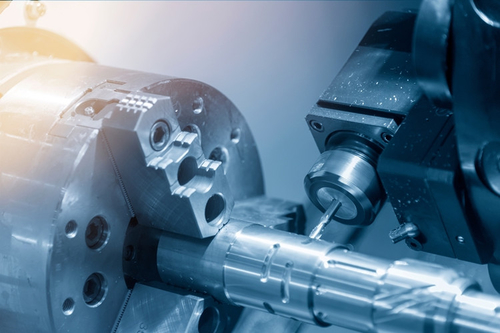
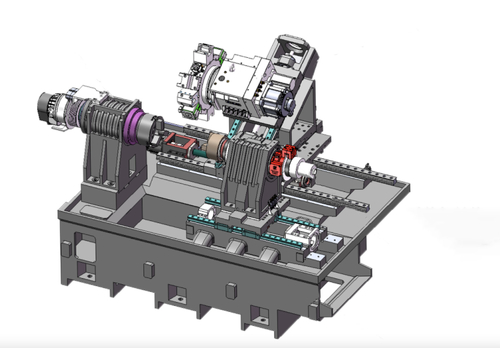
A parallel lathe is primarily designed for cutting and shaping rotating cylindrical components. During operation, the workpiece is clamped between the chuck and tailstock, rotating around its axis. The cutting tool, mounted on a tool post, moves longitudinally or transversely to remove material.
Key characteristics include:
-
A parallel alignment between spindle centerline and bed rail
-
Manual or semi-automatic operational control
-
Suitable for shaping outer surfaces, inner holes, facing, drilling, threading, and taper turning
Because of its straightforward mechanism and user-friendly structure, the parallel lathe remains one of the most fundamental machines in machining workshops.
Common Industries Using the Parallel Lathe
The parallel lathe is widely used across multiple industrial sectors, especially where mechanical components are produced or maintained. Typical industries include:
-
Automotive manufacturing
-
Machinery equipment production
-
Aerospace component processing
-
Shipbuilding and marine engineering
-
Oil and petrochemical processing
-
Repair and maintenance workshops
Its versatility allows machinists to produce and refurbish various rotating components efficiently.
Typical Products Machined on a Parallel Lathe
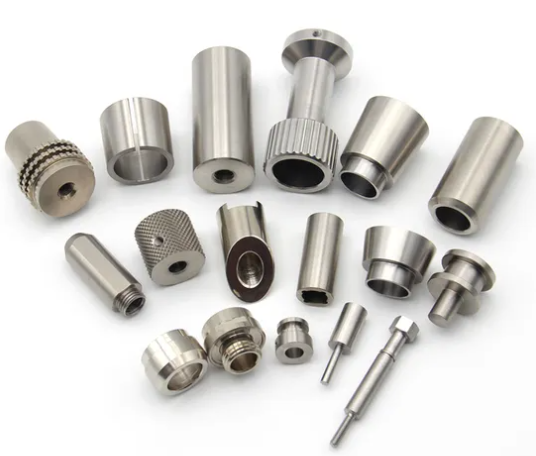
The parallel lathe is ideal for machining cylindrical and rotational parts such as:
-
Drive shafts and motor shafts
-
Pipe fittings and flanges
-
Bearings and sleeves
-
Bolts, nuts, and threaded rods
-
Pulleys and couplings
-
Custom maintenance parts
Whether in mass production or small-scale repair tasks, the parallel lathe provides reliable and stable cutting performance.
Difference Between a Parallel Lathe and a CNC Lathe
While both the parallel lathe and CNC lathe are used for similar turning functions, their capabilities and efficiency differ significantly:
| Feature | Parallel Lathe | CNC Lathe |
|---|---|---|
| Control Method | Manual or semi-manual operation | Fully computer-controlled |
| Precision Level | Operator skill influences accuracy | High repeatability and precise G-code control |
| Productivity | Suitable for custom or small-batch tasks | Ideal for large-scale batch production |
| Programming | No programming needed | Requires CNC programming knowledge |
| Investment Cost | Lower | Higher |
In short, the parallel lathe is best suited for flexible machining and general workshop use, while CNC lathes are preferred when high precision and high-volume output are required.
Conclusion
The parallel lathe remains a vital and versatile machine in the metalworking industry. It is widely used to process cylindrical parts across industries such as automotive, machinery, and shipbuilding. While modern CNC lathes offer faster and more precise mass production, the parallel lathe continues to be valued for its operational simplicity, cost-effectiveness, and adaptability in custom machining and repair work.
For manufacturers seeking a reliable and foundational turning solution, the parallel lathe remains an essential and irreplaceable choice in today’s machining environment.
What is cnc turning machine?
What is the main use of a CNC machine?