How does a CNC lathe work?
How a CNC Lathe Works
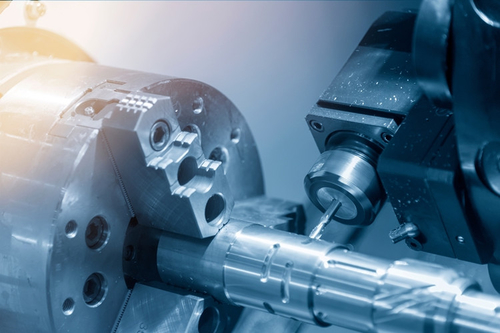
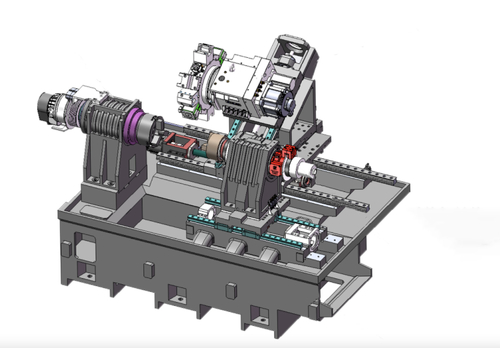
The operation of a CNC lathe is based on rotational cutting. The workpiece is held in a rotating spindle, while a stationary cutting tool is moved along programmed paths to remove material and shape the part. The movements are controlled by the CNC controller using G-code programming.
Key Working Steps:
-
Clamping the Workpiece – The material is fixed in the chuck of the spindle.
-
Programming – Engineers input machining commands into the CNC controller.
-
Tool Positioning – The servo motors move the tool along X and Z axes precisely.
-
Material Removal – The tool cuts the rotating workpiece to achieve the required dimensions.
-
Quality Control – The lathe ensures repeatable accuracy across production batches.
This automation reduces human error while increasing production efficiency and precision.
Common Applications of CNC Lathes
CNC lathes are used in a wide range of industries due to their versatility:
| Industry | Typical Parts Produced |
|---|---|
| Automotive | Shafts, gears, pistons, bushings |
| Aerospace | High-precision turbine parts |
| Medical Devices | Surgical tools, implants, screws |
| Electronics | Metal casings, precision connectors |
| Energy and Oil | Valve bodies, couplings, pipe fittings |
| Custom Manufacturing | Prototypes, one-off precision parts |
Whether for mass production or single-unit prototyping, CNC lathes deliver consistent, repeatable results.
Optional Accessories and Attachments
To expand capability and productivity, CNC lathes can be equipped with various accessories:
| Accessory | Function |
|---|---|
| Tool Turret / Tool Post | Holds multiple cutting tools for fast switching |
| Live Tooling | Enables drilling and milling operations on the lathe |
| Chip Conveyor | Removes chips automatically for efficient machining |
| Bar Feeder | Automatically feeds long stock for continuous production |
| Coolant System | Reduces heat, improves tool life and surface finish |
| Tailstock | Supports long workpieces to prevent vibration |
These accessories enhance processing speed, surface quality, and production stability.
Why Choose a CNC Lathe?
-
High precision and consistency
-
Reduced labor cost
-
High production efficiency
-
Complex part machining capability
Investing in a CNC lathe means improving output quality while lowering manufacturing time and cost.
Take Action — Find a CNC Lathe Today
If your business needs greater precision, faster production, and higher productivity, upgrading to a CNC lathe is the right move. Whether you are producing prototypes or mass-manufactured components, a CNC lathe can significantly elevate your manufacturing performance.
Ready to improve your production capability?
Contact us now to choose the best CNC lathe for your factory.

What is the main use of a CNC machine?
What is a parallel lathe?