What Is a Vertical Milling Machine?
What is a Vertical Milling Machine?
A vertical milling machine is one of the most crucial and versatile tools in the field of machining, widely used across various industries like metalworking, manufacturing, and precision engineering. Known for its unique working principle, flexible operation, and powerful machining capabilities, it has become an indispensable piece of equipment in modern manufacturing. This article delves into the basic definition, structural features, working principle, applications, and operational considerations of vertical milling machines.
1. Definition of a Vertical Milling Machine
A vertical milling machine is a type of machine tool that uses rotating cutting tools to perform machining operations, such as milling, drilling, and boring. The defining feature of a vertical milling machine is the orientation of the spindle, where the axis of the cutting tool is aligned vertically to the surface of the workpiece. This design makes it particularly effective for machining small to medium-sized parts and for performing tasks requiring high precision.
Vertical milling machines are widely used in various sectors including mechanical engineering, mold manufacturing, automotive, aerospace, and electronics industries. They are particularly suited for tasks like small-batch production and intricate part machining.
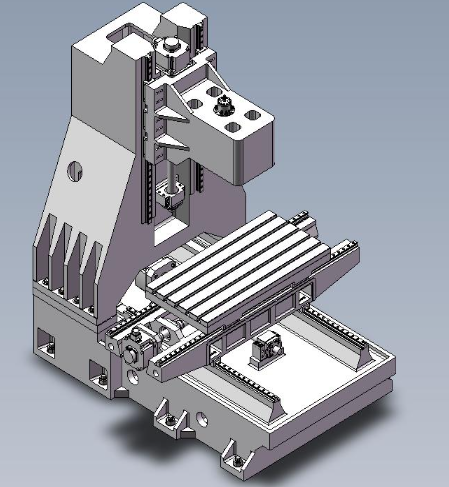
The primary components of a vertical milling machine include:
-
Column:
The column is the main body of the machine, supporting other essential components such as the spindle, worktable, and feed mechanisms. -
Worktable:
The worktable is where the workpiece is mounted. It can move in multiple directions—usually X, Y, and Z axes—to allow precise positioning during the machining process. -
Spindle:
The spindle is the rotating component that holds the cutting tool (such as a milling cutter). The spindle is driven by a motor and can operate at variable speeds, depending on the requirements of the material and the machining process. -
Cutter (Tool):
The cutting tool is the part of the milling machine that removes material from the workpiece. The cutter can be of various types, such as end mills, face mills, and ball nose cutters, depending on the application. -
Feed Mechanism:
The feed mechanism controls the movement of the worktable and the spindle, allowing for precise and controlled motion during machining. -
Control System:
Modern vertical milling machines often feature a computer numerical control (CNC) system, which allows for automated, highly precise machining by using pre-programmed instructions to control the movement of the machine.
3. Working Principle of a Vertical Milling Machine
The working principle of a vertical milling machine involves rotating the cutting tool (milling cutter) at high speeds while the workpiece is held firmly in place on the worktable. The cutter removes material from the workpiece in a series of passes, progressively shaping it according to the required specifications.
Common milling operations on a vertical milling machine include:
-
Face Milling: The cutting tool is positioned parallel to the surface of the workpiece, removing material across the face of the part.
-
End Milling: The tool is used to cut along the vertical axis, typically to create grooves, pockets, or contours.
-
Slotting: The milling cutter is used to create slots in the workpiece, typically for fitting parts or creating guides.
-
Drilling: The vertical milling machine can also be used to drill holes by attaching a suitable drill bit to the spindle.
By adjusting the feed rates and spindle speed, the operator can control cutting depth, speed, and precision, allowing for a wide range of machining operations.
4. Applications of Vertical Milling Machines
Vertical milling machines are used in a broad range of industries, owing to their ability to perform precision machining on a variety of materials. Common applications include:
-
Mechanical Engineering:
In mechanical engineering, vertical milling machines are frequently used to machine components such as shafts, gears, brackets, and housings, which are essential in the assembly of machinery. -
Mold Manufacturing:
The versatility of vertical milling machines makes them a preferred tool for creating intricate molds used in industries like injection molding, die-casting, and stamping. -
Automotive Industry:
Vertical milling machines are used in the production of components for the automotive sector, such as engine blocks, cylinder heads, transmission parts, and chassis components, especially in low- to medium-volume production runs. -
Aerospace:
In aerospace engineering, where precision is critical, vertical milling machines are utilized to fabricate complex parts like turbine blades, landing gear components, and aircraft structural parts. -
Electronics:
Vertical milling machines are used to manufacture components in the electronics industry, such as heat sinks, housings for electronic devices, and micro-machined parts.
5. Operation and Maintenance of a Vertical Milling Machine
Operational Tips:
-
Choosing the Right Tool and Speed:
Selecting the appropriate cutting tool and adjusting the spindle speed are essential for optimizing cutting performance and tool life. Different materials require different cutting speeds. -
Proper Clamping of Workpieces:
Ensuring the workpiece is securely clamped to the table is critical to prevent vibration and movement during machining, which can affect accuracy. -
Controlling Feed Rates:
The feed rate, or the rate at which the cutting tool advances across the workpiece, should be adjusted to balance efficiency and precision. A higher feed rate can improve productivity but may reduce surface finish quality. -
Avoiding Over-Cutting:
Excessive cutting depth can lead to poor surface finish, tool wear, and machine overload. It's important to take small, consistent cuts, especially when working with harder materials.
Maintenance Considerations:
-
Regular Lubrication:
The lubrication system should be regularly checked to ensure all moving parts are properly lubricated, reducing friction and wear. -
Cleaning:
Cleaning the worktable, spindle, and cutting tools after each job is essential for maintaining accuracy and extending the machine's lifespan. -
Tool Inspection:
Tools should be inspected for wear regularly. Worn-out tools can affect the quality of the machined part and lead to unnecessary downtime. -
Electrical System Checks:
For CNC-equipped machines, it is important to regularly inspect the electrical and control systems to ensure the machine operates as expected.
What is a parallel lathe?
What is CNC VMC and HMC?