How to Choose a Turn-Mill Machine? A Complete Guide to Turn-Mill Centers

Cultivated in CNC Machine Industry for 20+ years.
Specializing in CNC Milling, Drilling, Turning, Tapping, and so on...
Self-created Brand LiSN for 10+ Years



As manufacturing continues to evolve toward higher precision, greater efficiency, and smarter automation, more companies are investing in turn-mill machines. From aerospace and medical devices to automotive components and precision machining, turn-mill technology is gradually replacing traditional machining methods that rely on separate lathes and machining centers. But what exactly is a turn-mill machine? How does it compare to a Vertical Machining Center (VMC)? And how can manufacturers choose the right machine for their production needs? This guide provides a comprehensive overview.
What Is a Turn-Mill Machine?
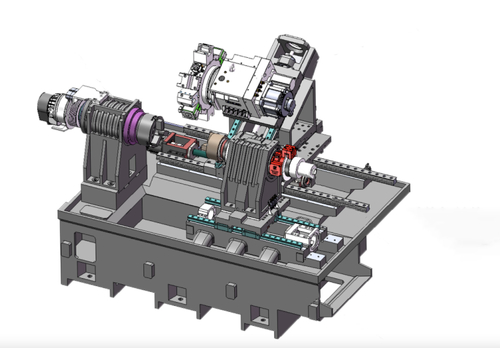
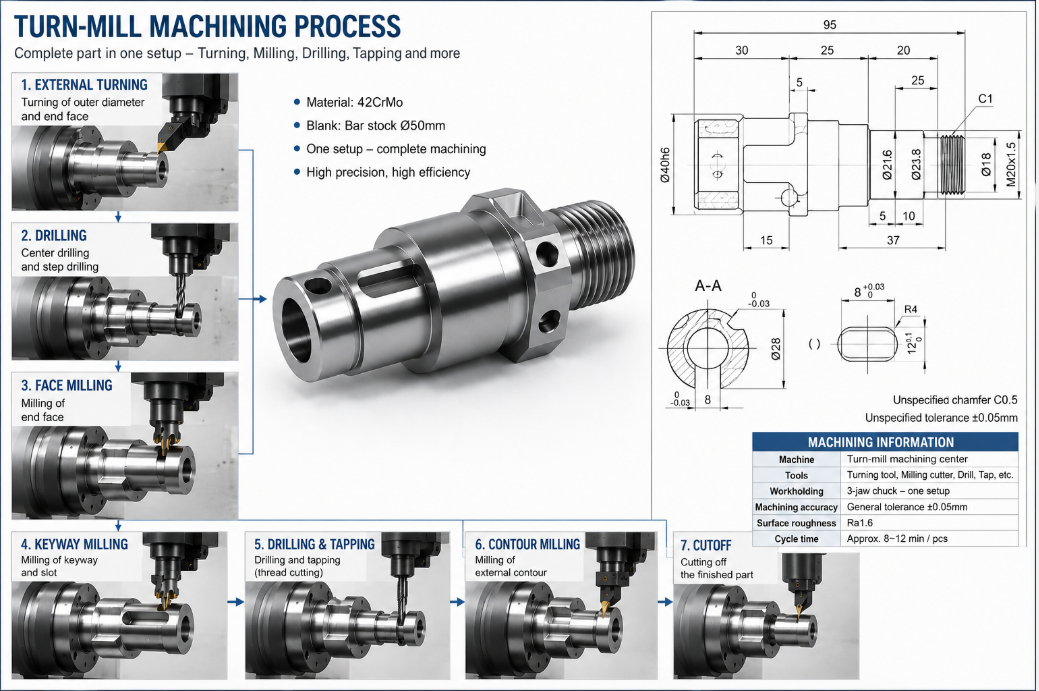
A turn-mill machine, also known as a turn-mill center, is a CNC machine tool that combines turning, milling, drilling, tapping, and boring operations into a single machine. In traditional manufacturing, complex parts often require multiple machines and several setups to complete different machining processes. A turn-mill machine allows manufacturers to perform most or all of these operations in a single setup.
In simple terms, a turn-mill machine integrates the capabilities of a CNC lathe and a machining center into one platform, enabling complete machining of complex parts with improved efficiency and accuracy.
As labor costs rise and demand for high-precision components continues to grow, turn-mill technology has become a key solution for modern manufacturing and smart factory environments.

Turn-Mill Machine vs. VMC: What Is the Difference?
One of the most common questions manufacturers face when purchasing equipment is whether to invest in a turn-mill machine or a VMC (Vertical Machining Center).
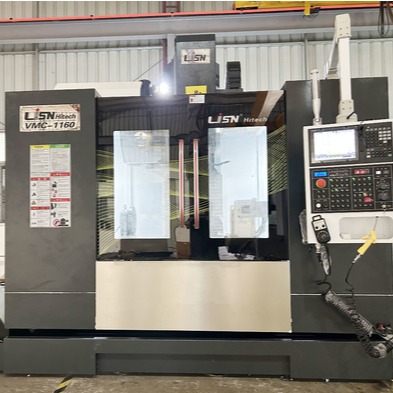
A VMC is primarily designed for milling operations and is ideal for machining flat surfaces, molds, plates, and prismatic parts. When machining shaft-type components, manufacturers typically need to perform turning operations on a lathe first and then transfer the workpiece to a VMC for milling, drilling, or tapping.
A turn-mill machine, on the other hand, combines both turning and milling capabilities, allowing it to complete multiple operations in a single setup.
The biggest advantage of a turn-mill machine is the reduction of setups. Traditional machining processes may require two to five setups, while a turn-mill machine can often complete the entire part in one setup. This minimizes positioning errors and significantly improves concentricity, dimensional accuracy, and surface finish.
From a productivity standpoint, turn-mill machines also offer substantial benefits. By eliminating part transfers and reducing idle time between operations, manufacturers can often reduce overall production cycles by 30% to 70%, resulting in higher throughput and lower manufacturing costs.
Key Advantages of Turn-Mill Machines
Complete Machining in a Single Setup
One of the most significant benefits of a turn-mill machine is process integration. Complex parts can be turned, milled, drilled, and tapped without removing the workpiece from the machine.
Improved Machining Accuracy
Since the workpiece remains clamped throughout the entire machining process, turn-mill machines greatly improve concentricity, perpendicularity, and positional accuracy. This is particularly important for industries such as aerospace and medical manufacturing, where precision is critical.
Higher Productivity
Traditional manufacturing workflows often involve:
Lathe → Part Transfer → Machining Center → Inspection → Secondary Operations
A turn-mill machine consolidates these steps into a single process, reducing non-cutting time and maximizing machine utilization.
Reduced Labor Costs
A single turn-mill machine can often replace multiple machines and operators. This helps manufacturers reduce labor expenses while simplifying production management.
Smaller Factory Footprint
By combining multiple machining processes into one machine, turn-mill centers require less floor space than separate lathes and machining centers, making them an excellent choice for facilities with limited production space.
Automation-Friendly Design
Modern turn-mill machines can be integrated with bar feeders, robotic loading systems, gantry robots, and automated material handling solutions. This makes them ideal for lights-out manufacturing and Industry 4.0 environments.
What Types of Products Can a Turn-Mill Machine Produce?
Turn-mill machines are particularly well suited for machining complex, high-precision, multi-operation components.
In the aerospace industry, they are commonly used for engine shafts, aerospace connectors, and precision structural components.
In medical manufacturing, turn-mill technology is widely applied to orthopedic implants, dental implants, and surgical instruments that require exceptional precision and surface quality.
Automotive manufacturers use turn-mill machines to produce transmission shafts, steering system components, turbocharger parts, and electric vehicle components.
In the electronics and telecommunications sector, turn-mill machines are frequently used to manufacture RF connectors, 5G communication components, and precision housings.
Other applications include oil and gas equipment, valve components, pump parts, automation equipment, and a wide range of precision-machined metal components.
How to Choose the Right Turn-Mill Machine
Selecting the right turn-mill machine requires careful consideration of product requirements, production volume, material types, and future business goals.
The first step is to evaluate the types of parts being produced. Manufacturers focusing on shaft-type components should prioritize turning performance and spindle capabilities. Those producing highly complex parts should consider machines equipped with Y-axis functionality and full five-axis machining capabilities.
Material selection is another important factor. Aluminum, stainless steel, titanium, copper alloys, and high-temperature alloys all require different levels of machine rigidity, spindle power, and cutting performance.
Precision requirements should also influence purchasing decisions. Industries such as aerospace and medical manufacturing often require repeatability within 0.003 mm or better, making high-end machine platforms a worthwhile investment.
Companies should also consider automation compatibility. As labor shortages and operating costs continue to increase, machines that support robotic integration, automated loading systems, and smart manufacturing technologies provide greater long-term value.
The CNC control system is equally important. Popular options include FANUC, Siemens, Mitsubishi, and SYNTEC. Reliable control systems improve machine performance, simplify programming, and reduce maintenance costs over time.

How Much Does a Turn-Mill Machine Cost?
The price of a turn-mill machine varies significantly depending on machine size, configuration, machining capability, automation level, and brand.
Entry-level turn-mill machines typically range from USD $30,000 to $80,000 and are suitable for small manufacturers and general machining applications.
Mid-range machines usually cost between USD $80,000 and $250,000 and are commonly used in automotive, precision engineering, and industrial manufacturing.
High-end five-axis turn-mill centers can range from USD $250,000 to over $1 million, particularly when equipped with advanced automation systems and premium CNC controls. These machines are often found in aerospace, medical, and high-end manufacturing environments.
When evaluating machine costs, manufacturers should focus not only on the purchase price but also on the overall return on investment (ROI). Increased productivity, reduced labor costs, and improved product quality often allow businesses to recover their investment within one to three years.
Frequently Asked Questions
Can a Turn-Mill Machine Replace a VMC?
Not entirely. VMCs remain the preferred solution for machining molds, plates, and large prismatic components. However, for shaft-type parts and complex components that require both turning and milling operations, turn-mill machines offer a significant advantage.
Are Turn-Mill Machines Suitable for Small Businesses?
Yes. Companies producing a wide variety of parts in small or medium batches can benefit greatly from the flexibility and efficiency of turn-mill technology.
What Is the Typical ROI for a Turn-Mill Machine?
Most manufacturers achieve a return on investment within one to three years, depending on production volume, labor savings, and automation levels.
Conclusion
Turn-mill machines have become an essential part of modern manufacturing by enabling high-efficiency, high-precision, and automated production. Compared with traditional machining methods that require separate lathes and machining centers, turn-mill technology allows manufacturers to complete multiple operations in a single setup, improving productivity while reducing labor and operational costs.
For companies considering equipment upgrades, investing in the right turn-mill machine is more than a machinery purchase—it is a strategic decision that can enhance competitiveness, increase production capacity, and support long-term business growth. As smart manufacturing and industrial automation continue to advance, turn-mill technology will play an increasingly important role in the future of precision engineering and advanced manufacturing.
What Kind of Machine Is Best for Mold Manufacturing?
CNC Deep Hole Drilling Machines: Precision Solutions for Industrial Manufacturing
Related Article