How to Choose a CNC Lathe for Shaft Machining: A Guide to Types, Models, Materials, and Machining Capacity
How to Choose a CNC Lathe for Shaft Machining: A Guide to Types, Models, Materials, and Machining Capacity
When selecting a CNC lathe for shaft machining, first define the workpiece material, blank dimensions, accuracy requirements, machining operations, and production volume. Then choose the machine model and configuration.
For conventional stepped shafts, start by evaluating a two-axis CNC lathe. Long shafts require particular attention to the tailstock and steady rest. Shafts with cross-holes, flats, or keyways may benefit from a turn-mill machine. For small-diameter, slender parts made from bar stock, consider a Swiss-type CNC lathe.
The key is to confirm whether the machine can consistently produce acceptable parts within the target cycle time.
1. What Is a CNC Lathe, and What Products Can It Machine?
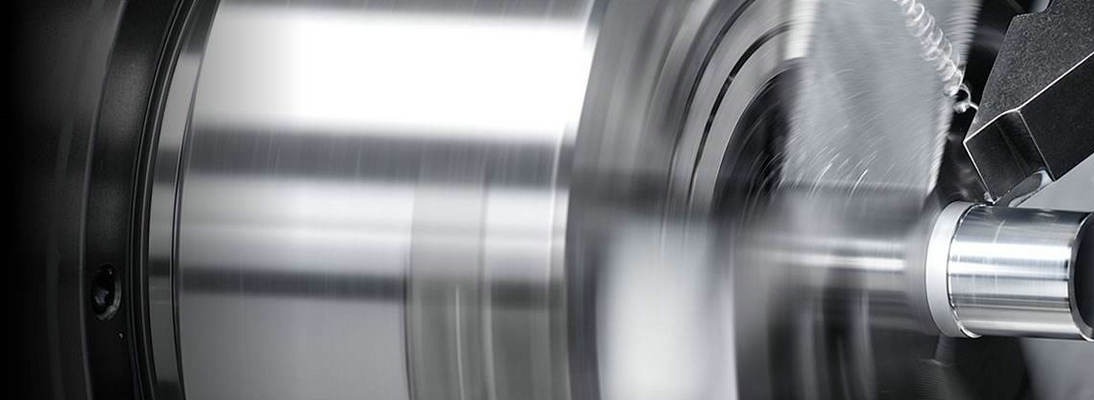
A CNC lathe uses programmed instructions to control spindle rotation, tool movement, and the machining sequence. During basic turning, the spindle rotates the workpiece while a cutting tool removes material to produce the dimensions and profiles specified on the drawing.
CNC lathes primarily machine rotational parts, including shafts, sleeves, discs, rings, and threaded fittings.
| Product Category | Typical Products | Common Machining Operations |
|---|---|---|
| Shafts | Motor shafts, transmission shafts, stepped shafts, pins | External turning, facing, step turning, taper turning, grooving, threading |
| Sleeves and bushings | Shaft sleeves, bushings, spacer sleeves | Boring, external turning, facing, internal and external grooving |
| Disc-shaped parts | Flanges, end covers, coupling discs | Facing, external turning, boring |
| Rings | Spacer rings, locating rings, ring blanks | Internal and external turning, facing, grooving |
| Fittings | Threaded fittings, pipe fittings | Internal and external threading, hole machining, tapered sealing surfaces |
A basic two-axis CNC lathe mainly performs turning and axial hole machining. With live tooling and the appropriate controlled axes, it can also perform certain drilling, tapping, and milling operations. Actual capabilities depend on the machine configuration, tooling, and available machining space.
2. What Types of CNC Lathes Are Available, and What Can They Do?
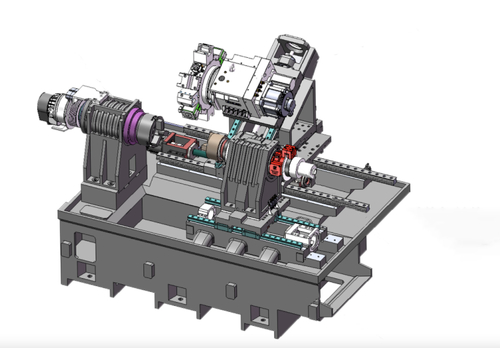
CNC lathes can be classified by bed design, tool arrangement, and machining capability. These classifications can overlap: one machine may combine a slant bed, a tool turret, and turn-mill capabilities.
2.1 Common Types and Applications
| Type | Main Features and Capabilities | Applications to Consider |
|---|---|---|
| Flat-bed CNC lathe | Performs conventional turning; actual performance depends on its design and configuration | General-purpose shafts, sleeves, and varied part types |
| Slant-bed CNC lathe | Commonly used for production turning; the layout generally facilitates chip evacuation | Stepped shafts, motor shafts, and batch production of rotational parts |
| Gang-tool CNC lathe | Holds multiple tools in a row and selects them by moving the tool slide | Smaller parts with a relatively concentrated set of operations |
| Turret CNC lathe | Uses an indexing turret to hold multiple tools and support sequential operations | Shafts with multiple steps, grooves, and holes |
| Turn-mill CNC lathe | Combines turning with selected milling and drilling operations using live tooling and appropriate controlled axes | Shafts with cross-holes, flats, or keyways |
| Swiss-type CNC lathe | Moves the headstock axially; guide-bushing configurations support the workpiece near the cutting point | Small-diameter, slender bar-stock parts and precision batch production |
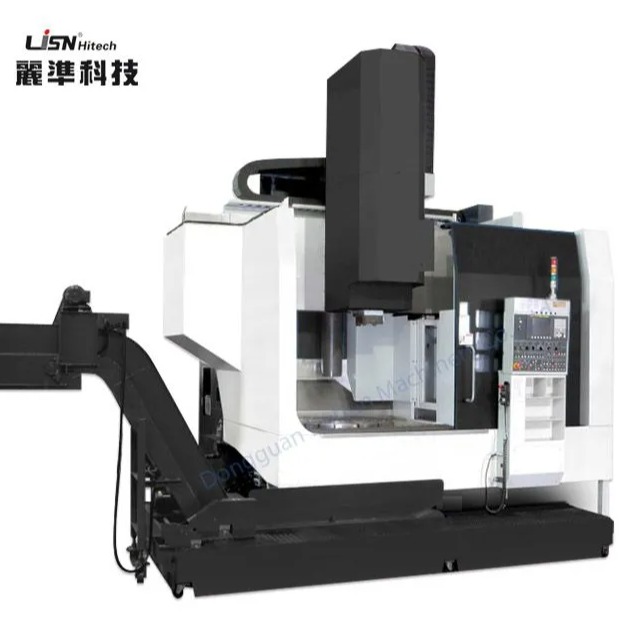
| Vertical CNC lathe | Rotates the workpiece around a vertical axis | Larger, heavier disc-shaped and ring-shaped parts |
For conventional shafts, begin by evaluating horizontal CNC lathes. Then select the toolholding, workpiece support, and automation configuration according to part geometry and production volume.
2.2 Model Examples and Capabilities
The LZ-450, LZ-5000, CK6150, CK6163, and CK6166C are CNC lathe candidates for different shaft sizes. The C6150, C6250, and C6250B series are considered separately as conventional lathes; the actual control method depends on the supplied configuration.
The following table outlines potential conventional turning applications. It does not mean that every function or accessory is standard equipment.
| Model | Main Capabilities or Features | Shaft Machining Applications to Evaluate | Key Selection Factors |
|---|---|---|---|
| LZ-450 | Evaluate for external turning, facing, step turning, grooving, taper turning, and threading | Small to medium-sized short shafts, pins, and stepped shafts | Usable machining space, bar capacity, workholding, and tailstock configuration |
| LZ-5000 | Larger nominal machining envelope and higher spindle motor power than the LZ-450 | Larger short to medium-length shafts and rotational parts | Chuck specifications, workpiece weight, and spindle torque |
| CK6150 | Available in multiple workpiece-length versions for conventional CNC turning | Stepped shafts and transmission shafts of different lengths | Length version, tailstock, and accuracy requirements |
| CK6163 | Larger swing over bed and spindle bore | Shafts requiring greater rotational clearance | Machining space at the tool slide, spindle load, and support configuration |
| CK6166C | Higher specified maximum turning diameter at the tool slide | Larger-diameter shafts and rotational parts | Actual machining diameter, workpiece weight, and rigidity |
| C6150 / C6250 / C6250B | Conventional turning equipment; capabilities depend on configuration | One-off parts, small batches of shafts, and repair work | Manual operation requirements, length version, and model specifications |
The available specifications do not confirm whether these models include live tooling, a C-axis, a Y-axis, or a sub-spindle. They should therefore not automatically be described as turn-mill machines.
3. How to Select a CNC Lathe by Model, Material, and Workpiece Size
3.1 Understand the Differences Between Key Dimensions
Swing over bed, maximum machining diameter, spindle bore, and bar capacity are different specifications.
| Parameter | Meaning and Selection Relevance |
|---|---|
| Maximum swing over bed | Indicates the rotational clearance above the bed; it is not the same as the cutting diameter |
| Maximum machining diameter | Indicates radial machining capacity under the specified tooling and configuration conditions |
| Maximum machining length | Indicates axial machining capacity, which must be checked against workholding and tool clearance |
| Maximum workpiece length | Identifies the workpiece-length specification for a particular machine version; it should not be treated as the effective cutting length |
| Spindle bore | The bore through the spindle itself; it does not directly represent the through-bar capacity of the complete workholding system |
| Bar capacity | Indicates the bar size that can pass through the relevant passage; compatibility with the collet, drawtube, and bar feeder must also be checked |
A workpiece is not necessarily machinable simply because its diameter and length are below the maximum values in the brochure. Tools, chuck jaws, the tailstock, and support devices can all reduce usable space.
3.2 LZ Series CNC Lathe Specifications
| Specification | Unit | LZ-450 | LZ-5000 |
|---|---|---|---|
| Maximum swing over bed | mm | 450 | 560 |
| Maximum machining diameter | mm | 200 | 500 |
| Maximum machining length | mm | 300 | 530 |
| Spindle nose | — | A2-5 | A2-6 |
| Spindle motor power | kW | 5.5 | 11 |
| Listed spindle speed | rpm | 5000 | 3500 |
| Bar capacity | mm | Ø32 / Ø42; configuration to be confirmed | Ø52 |
Note: A2-5 and A2-6 are spindle nose designations, not chuck diameters. The source lists only one spindle-speed value for each model
3.3 CK Series CNC Lathe Specifications
| Specification | Unit | CK6150 | CK6163 | CK6166C |
|---|---|---|---|---|
| Maximum swing over bed | mm | 500 | 630 | 660 |
| Maximum turning diameter at the tool slide, following the source terminology | mm | 260 | 350 | 400 |
| Maximum workpiece-length options | mm | 750 / 1000 / 1500 / 2000 | 750 / 1000 / 1500 / 2000 | 750 / 1000 / 1500 / 2000 |
| Spindle bore | mm | 52 | 100 | 105 |
| Low spindle-speed range | rpm | 16–160 | 14–70–175; meaning to be confirmed | 12–100 |
| Medium spindle-speed range | rpm | 120–600 | 40–200–500; meaning to be confirmed | 70–300 |
| High spindle-speed range | rpm | 400–2000 | 100–520–1000; meaning to be confirmed | 260–1200 |
The listed lengths represent different machine versions. Confirm the length of the machine being supplied. The CK6163 spindle-speed entries have been preserved as provided; the three-value notation should not be interpreted as a continuous speed range without confirmation.
The source data for X/Z-axis repeatability contains formatting or axis-assignment ambiguities. It is therefore not used here as a guarantee of finished-part accuracy. Purchase acceptance should be based on confirmed technical specifications and cutting-trial results.
3.4 C Series Conventional Lathe Specifications
| Specification | Unit | C6150 | C6250 | C6250B |
|---|---|---|---|---|
| Maximum swing over bed | mm | 500 | 500 | 500 |
| Maximum swing over carriage | mm | 300 | To be confirmed | To be confirmed |
| Spindle bore | mm | 52 | 82 | To be confirmed |
| Maximum workpiece length | mm | Confirm for the selected version | Confirm for the selected version | Confirm for the selected version |
3.5 Initial Screening by Model, Material, and Size
There is no one-to-one relationship between a material and a machine model. Different machines can process the same material, with differences in cutting efficiency, accuracy stability, tool life, and cost.
The materials below are candidates for process evaluation, not applications already validated through cutting trials.
| Model | Dimensional Screening Criteria | Materials for Evaluation | |
|---|---|---|---|
| LZ-450 | Maximum machining diameter 200 mm; maximum machining length 300 mm | Aluminum alloys, brass, carbon steel, stainless steel, etc. | |
| LZ-5000 | Maximum machining diameter 500 mm; maximum machining length 530 mm | Carbon steel, alloy steel, stainless steel, aluminum alloys, etc. | |
| CK6150 | Maximum turning diameter at the tool slide 260 mm; workpiece-length versions from 750 to 2000 mm | Carbon steel, alloy steel, and other shaft materials | |
| CK6163 | Maximum turning diameter at the tool slide 350 mm; workpiece-length versions from 750 to 2000 mm | Carbon steel, alloy steel, stainless steel, etc. | |
| CK6166C | Maximum turning diameter at the tool slide 400 mm; workpiece-length versions from 750 to 2000 mm | Carbon steel, alloy steel, and other materials for larger shafts | |
| C series conventional lathes | Select according to the confirmed model and length version | Evaluate according to the material and tooling plan |
Hardened materials require a separate hard-turning assessment. Machine dimensions or motor power alone cannot establish whether turning can replace grinding.
3.6 Match the Cutting Configuration to the Material
| Material or Condition | Key Selection Factors | Information Required |
|---|---|---|
| Aluminum alloys | Spindle speed, chip evacuation, clamping deformation, and surface quality | Alloy grade, thin-wall features, and surface roughness requirements |
| Brass | Tool selection, burr control, and feeding method | Grade, dimensions, and batch size |
| Carbon steels such as Chinese grade 45 steel | Roughing torque, system rigidity, and chip control | Blank type, hardness, and machining allowance |
| Alloy steels such as 40Cr and 42CrMo | Heat-treatment condition, cutting load, and tool life | Annealed or quenched-and-tempered condition, and actual hardness |
| Stainless steels such as 304 and 316 | Coolant delivery, chip control, and stable workholding | Grade, hole depth, and surface quality requirements |
| Hardened steel | Hard-turning feasibility and subsequent grinding requirements | Hardness, interrupted-cut conditions, and final tolerances |
3.7 Prioritize Support for Long and Slender Shafts
The smaller the shaft diameter and the longer its unsupported section, the more attention must be paid to deflection and vibration. Consider the overall length, the smallest local diameter, and the cutting position.
A tailstock can support the end of the shaft, while a steady rest can provide intermediate support. The need for a steady rest depends on cutting forces, available support surfaces, and accuracy requirements.
When requesting a quotation, confirm whether the tailstock, centers, and steady rest are included and whether their installation restricts tool access.
3.8 Verify Accuracy and Productivity Through Cutting Trials
Machine positioning accuracy or repeatability should not be treated as the dimensional tolerance of the finished shaft. Acceptance criteria should also address roundness, cylindricity, runout, and surface roughness.
Before purchasing, agree on the following:
-
Use the specified material, hardness, and blank.
-
Use the workholding, tooling, and support configuration included in the quotation.
-
Machine several consecutive parts and check the stability of critical dimensions.
-
Record loading, unloading, part reversal, machining, and necessary inspection time.
-
Define the operations before and after heat treatment, including any grinding requirements.
4. FAQ: Common Questions About Buying a CNC Lathe for Shaft Machining
4.1 How Should I Choose Between the LZ-450 and LZ-5000?
Start with workpiece dimensions and workholding requirements. The LZ-450 has a nominal maximum machining diameter of 200 mm and length of 300 mm. The corresponding figures for the LZ-5000 are 500 mm and 530 mm.
If both meet the dimensional requirements, compare cutting load, cycle time, configuration, and total cost. Higher spindle power does not necessarily make every part more economical to produce.
4.2 What Are the Main Differences Between the CK6150, CK6163, and CK6166C?
Based on the available information, the main differences include swing over bed, maximum turning diameter at the tool slide, spindle bore, and spindle-speed specifications.
All three list multiple workpiece-length versions. Selection should therefore specify the model, length version, and configuration, rather than the model name alone.
4.3 Do I Need a Turn-Mill Machine for Shaft Machining?
Not necessarily. For shafts mainly requiring external turning, steps, grooves, and threads, start by evaluating a two-axis CNC lathe. If the part includes cross-holes, flats, or keyways, compare turn-mill machining with processing those features in separate operations.
A complete drawing helps determine whether additional capabilities can reduce setups and shorten cycle time.
4.4 Is a 1000 mm Machine Version Sufficient for a 1000 mm Shaft?
The length figure alone is not enough. Usable machining space must be checked against gripping length, facing operations, centers, the tailstock, and tool clearance.
Ask the supplier to confirm the appropriate length version using the actual workholding layout.
4.5 Is Higher Power Always Better for Machining Stainless Steel?
No. Torque at the actual cutting speed, tool and workpiece rigidity, coolant delivery, and chip control are also important.
Provide the stainless steel grade, hardness, blank dimensions, and target cycle time so the configuration can be assessed.
4.6 Can a CNC Lathe Guarantee a Dimensional Tolerance of ±0.005 mm?
This requires cutting trials on the specific part; it cannot be guaranteed from the model designation alone. Material, temperature rise, part geometry, workholding, and measurement methods all affect the result.
If the drawing requires this tolerance, define the relevant feature, measurement conditions, sample quantity, and acceptance criteria for consecutive-part production.
4.7 Does Every Long Shaft Require a Steady Rest?
No. The need depends on unsupported length, local diameter, cutting load, and allowable deflection.
Confirm the support arrangement during quotation, then check vibration, taper, and dimensional stability through cutting trials.
4.8 Can Automatic Bar Feeding or Robotic Loading Be Added?
Compatibility must be checked for the specific model, including interfaces, workholding control, feeding dimensions, and workpiece weight. Bar stock, forgings, and cut blanks usually require different handling solutions.
The available specifications do not establish that every model supports automation. State automation requirements separately in the quotation request.
4.9 Why Do Machines of Similar Size Have Very Different Prices?
Similar machining envelopes do not mean identical spindles, toolholding systems, CNC controls, fixtures, accessories, or service packages.
Ask suppliers to itemize standard equipment, optional equipment, installation, training, and excluded costs. Compare the total investment required for a complete machining solution.
Flat-Bed CNC Lathe vs Slant-Bed CNC Lathe: A Practical Buying Guide
Related Article