How Are CNC Machines Classified
author: Yannis
2025-03-18
How Are CNC Machines Classified
In the dynamic field of modern manufacturing, CNC machines have become an integral part. Their ability to execute complex machining operations with high precision and efficiency has revolutionized the production process. But have you ever wondered how these CNC machines are classified? Understanding the classification system can help manufacturers, engineers, and hobbyists alike to select the most suitable CNC machine for their specific needs.

Classification Based on Machining Process
1. Milling Machines
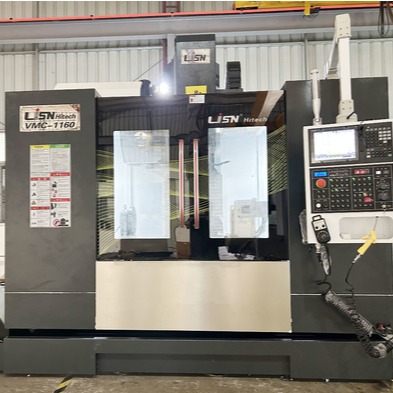
CNC milling machines are among the most common types. They are designed to remove material from a workpiece using a rotating cutting tool. This process can create a wide variety of shapes, including slots, pockets, and contours. Milling machines can be further classified into vertical and horizontal milling machines based on the orientation of the spindle. Vertical CNC milling machines are versatile and are often used for general - purpose machining, such as prototyping. Horizontal CNC milling machines, on the other hand, are more suitable for heavy - duty machining and are often used in industries like aerospace for machining large components.
2. Turning Machines
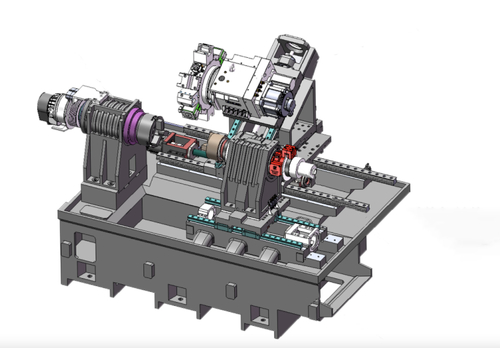
CNC turning machines, also known as lathes, work by rotating the workpiece while a cutting tool removes material from its surface. This results in the creation of cylindrical or conical shapes. These machines are excellent for producing parts with rotational symmetry, such as shafts, bolts, and screws. There are different types of turning machines, including engine lathes, turret lathes, and Swiss-type lathes.
3. Drilling Machines
CNC drilling machines are specialized in creating holes in workpieces. They use drill bits that are rotated at high speeds to penetrate the material. These machines can perform simple through-hole drilling as well as more complex operations like tapping (creating internal threads) and counterboring (enlarging the opening of a hole). Drilling machines can be stand-alone units or integrated into multi - function CNC machining centers to add drilling capabilities to milling and turning operations.
4. Grinding Machines
CNC grinding machines use abrasive wheels to remove material from the workpiece's surface, resulting in a smooth and precise finish. They are crucial for applications where high-precision surface finishes are required, such as in the manufacturing of bearings and optical components. There are different types of grinding processes, including surface grinding, cylindrical grinding, and internal grinding, each with its own set of CNC-controlled machines.

Classification by Axis Configuration
1. 3-Axis Machines
3 - axis CNC machines are the most basic and widely used. They control the movement of the cutting tool or workpiece along three linear axes: X, Y, and Z. These axes are perpendicular to each other, allowing for the creation of two - dimensional and simple three-dimensional shapes. A-axis CNC milling machine can perform operations like face milling, end milling, and drilling in a three - dimensional space but has limitations in machining complex curved surfaces.
2. 4-Axis Machines
Adding a fourth axis to a CNC machine typically involves the rotation of the workpiece or the cutting tool around one of the linear axes. Most commonly, the fourth axis is a rotary axis (usually labeled as A or B), which enables the machining of parts with more complex geometries. For example, in a 4-axis CNC milling machine, the rotary axis can be used to tilt the workpiece, allowing for the machining of angled surfaces without re - clamping the part.
3. 5-Axis Machines
5-axis CNC machines offer even greater flexibility and precision. They combine three linear axes (X, Y, Z) with two rotary axes. This allows the cutting tool to approach the workpiece from any angle, making it possible to machine highly complex and intricate parts in a single setup. 5-axis machines are widely used in industries such as aerospace, where parts with complex geometries, like turbine blades, need to be machined with high precision.

Classification by Worktable Size and Capacity
1. Bench-Top CNC Machines
Bench-top CNC machines are compact and designed for small - scale operations. They are often used in hobbyist workshops, educational institutions, or for prototyping. These machines have a limited worktable size and lower power capabilities compared to industrial - grade machines. However, they are more affordable and easier to set up, making them accessible to a wider range of users.
2. Medium-Sized CNC Machines
Medium - sized CNC machines are suitable for general - purpose manufacturing. They have a larger worktable size and higher power ratings, allowing for the machining of larger and more complex parts. These machines can handle a variety of materials, from plastics to metals, and are commonly used in small - to - medium - sized manufacturing companies.
3. Large-Scale CNC Machines
Large-scale CNC machines are designed for heavy - duty applications. They have an extremely large worktable size and high - power spindles to handle large workpieces and perform high - volume production. These machines are used in industries such as shipbuilding, automotive manufacturing (for large components like engine blocks), and large - scale infrastructure projects.

Classification by Control System
1. Open-Loop Control Systems
In an open - loop CNC machine, the control system sends commands to the motors based on the pre - programmed instructions, but there is no feedback mechanism to verify if the commands have been executed accurately. These systems are simpler and more affordable but are less accurate compared to closed - loop systems. They are often used in applications where high precision is not the primary requirement, such as in some hobbyist - level CNC machines.
2. Closed-Loop Control Systems
Closed-loop CNC machines use sensors to monitor the actual position and performance of the machine axes. The control system compares the actual position with the commanded position and makes adjustments in real-time. This results in higher accuracy and better repeatability. Most industrial-grade CNC machines use closed-loop control systems to ensure the production of high -quality parts with tight tolerances.

Classification by Application
1. General-Purpose CNC Machines
General-purpose CNC machines are versatile and can be used for a wide range of applications. They can perform multiple machining operations, such as milling, drilling, and turning, making them suitable for small-batch production and prototyping. These machines are often found in job shops that handle a variety of customer orders.
2. Special-Purpose CNC Machines
Special-purpose CNC machines are designed for specific applications. For example, there are CNC machines dedicated to woodworking, which are optimized for cutting and shaping wood materials. There are also CNC machines for metalworking, plastic machining, and even for fabricating circuit boards. These machines are tailored to the unique requirements of the specific material or process, offering enhanced performance and efficiency in their respective applications.

Classification by Power Source
1. Electric-Powered CNC Machines
Electric-powered CNC machines are the most common. They use electric motors to drive the machine axes and the spindle. These machines are efficient, quiet, and offer precise control over the machining process. The power supply can be either single - phase or three - phase, depending on the size and power requirements of the machine.
2. Hydraulic-Powered CNC Machines
Hydraulic-powered CNC machines use hydraulic systems to generate the force required for machining operations. They are typically used in heavy-duty applications where high forces are needed, such as in large-scale metal forming and cutting. Hydraulic systems can provide a smooth and powerful motion, but they are generally more complex and require more maintenance compared to electric - powered machines.
In conclusion, CNC machines are classified in multiple ways, each classification method providing valuable insights into the capabilities and applications of these remarkable machines. Whether you are a manufacturer looking to invest in a new CNC machine or a student learning about manufacturing processes, understanding these classification systems is essential for making informed decisions.


What Is CNC In Manufacturing
What Is The Industry Standard For CNC Machining
Related Article
Poor surface finish, inconsistent dimensions, vibration, or an unexpected stop doesn’t always mean something is wrong with your CNC lathe. Worn tooling, poor workholding, and unsuitable cutting parameters can cause many of the same symptoms.
Common problems and solutions for CNC lathes
How to Choose a CNC Lathe for Shaft Machining: A Guide to Types, Models, Materials, and Machining Capacity