How Many Axes in a CNC Lathe Machine
author: Yannis
2025-02-28
How Many Axes in a CNC Lathe Machine
In the world of CNC machining, the number of axes in a CNC lathe directly impacts its versatility and precision. While CNC machines are renowned for their ability to automate complex tasks, understanding how axes determine a lathe’s capabilities is crucial for manufacturers. This blog explores the different types of axes in CNC lathes, their applications, and how innovations like LiSN from Dongguan Lizhun Machinery Co., LTD are pushing the boundaries of multi-axis machining.
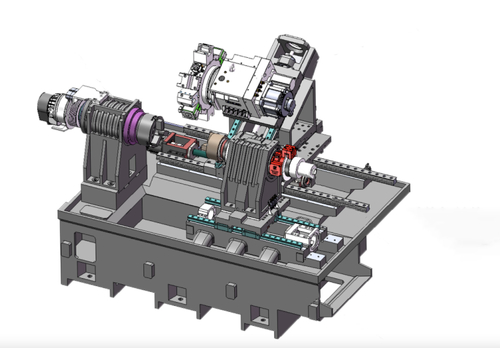
2.1 Defining Axes in CNC Lathes
A CNC lathe operates on a coordinate system where each axis represents a direction of movement. The primary axes are:
- X-Axis: Radial movement (perpendicular to the workpiece’s centerline).
- Z-Axis: Longitudinal movement (parallel to the workpiece’s rotation axis).
- C-Axis: Rotational movement of the spindle (enables features like threading).
Additional axes, such as Y-Axis (vertical movement) or B-Axis (tool tilt), expand the machine’s ability to create intricate geometries.
2.2 Why Axis Count Matters
The number of axes determines:
- Part Complexity: More axes allow for simultaneous 3D machining.
- Efficiency: Fewer setups reduce production time.
- Accuracy: Advanced axes minimize human intervention errors.

3. Common CNC Lathe Axis Configurations
3.1 Two-Axis Lathes (X and Z)
- Function: Basic turning, facing, and grooving.
- Applications: Ideal for cylindrical parts in automotive and general manufacturing.
- Advantages: Cost-effective and easy to program.
3.2 Three-Axis Lathes (X, Z, C)
- Function: Adds a rotational C-Axis for features like helical threading or drilling off-center holes.
- Applications: Medical implants and aerospace components requiring precise angles.
3.3 Four-Axis Lathes (X, Z, C, Y)
- Function: Introduces a Y-Axis for vertical movement, enabling milling operations on the workpiece.
- Applications: Complex parts with undercuts or intersecting holes.
3.4 Five-Axis and Beyond
- Function: Combines linear (X, Y, Z) and rotational (B, C) axes for full 3D machining.
- Applications: High-precision industries like aerospace and energy, where parts demand intricate shapes.

4. Choosing the Right Number of Axes
4.1 Factors to Consider
- Part Complexity: Simple designs may only need 2 axes, while aerospace components require 5+.
- Material and Size: Larger workpieces may benefit from vertical lathes (Y-Axis).
- Budget: Higher-axis machines offer more capabilities but come with increased costs.
4.2 Industry-Specific Needs
- Automotive: 2-3 axes for mass-producing gears and shafts.
- Aerospace: 5+ axes for turbine blades and structural components.
- Medical: 4-5 axes for 定制 implants and surgical tools.

5. Maintenance and Future Trends
5.1 Maintaining Multi-Axis Lathes
- Calibration: Regularly check axis alignment to ensure accuracy.
- Lubrication: Keep moving parts well-lubricated to prevent wear.
- Software Updates: Ensure LiSN and control systems are up-to-date for optimal performance.
5.2 The Future of CNC Axes
Advancements like LiSN are driving the industry toward smarter, more adaptive machines. With the rise of Industry 4.0, future CNC lathes may incorporate AI and IoT to self-optimize axis movements in real time.

Conclusion
The number of axes in a CNC lathe is a critical factor in determining its capabilities, from basic 2-axis turning to complex 5-axis machining. Innovations like LiSN from Dongguan Lizhun Machinery Co., LTD are reshaping the industry by combining multi-axis precision with intelligent automation. By choosing the right axis configuration and partnering with forward-thinking manufacturers, businesses can stay ahead in the competitive world of modern manufacturing.

What Factors Will Affect The Price Of A CNC Lathe
How Does A CNC Lathe Work
Related Article
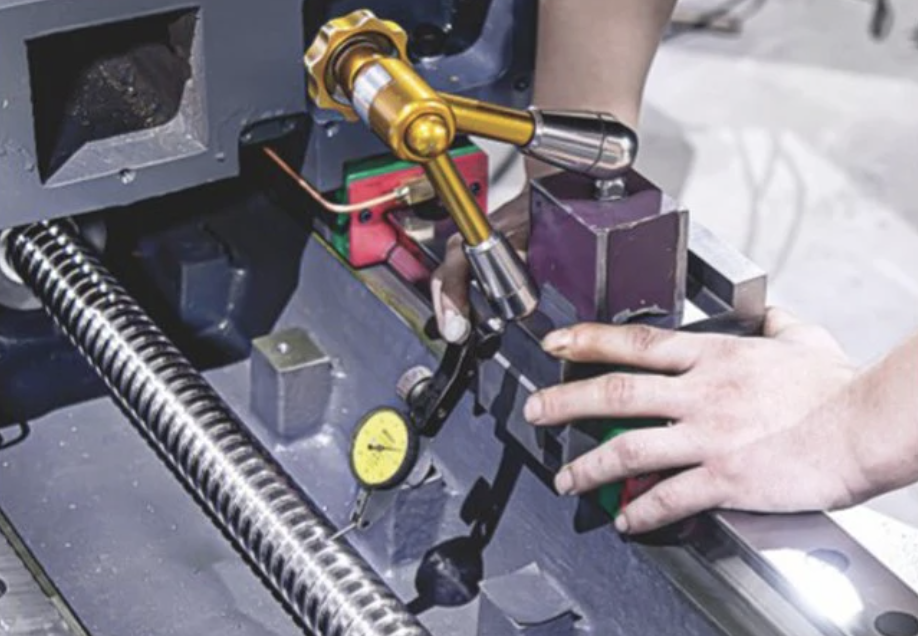
Poor surface finish, inconsistent dimensions, vibration, or an unexpected stop doesn’t always mean something is wrong with your CNC lathe. Worn tooling, poor workholding, and unsuitable cutting parameters can cause many of the same symptoms.
Common problems and solutions for CNC lathes
How to Choose a CNC Lathe for Shaft Machining: A Guide to Types, Models, Materials, and Machining Capacity