What Does CNC Machine Stand For
author: Yannis
2025-02-25
What Does CNC Machine Stand For
In modern manufacturing, CNC machines have become an indispensable part. But what exactly does CNC stand for? And what makes these machines so crucial in various industries? In this blog post, we will explore the ins and outs of CNC machines, their history, how they work, and their applications. We will also touch upon the contributions of companies like Dongguan Lizhun Machinery Co., LTD and the role of LiSN in related fields.

1. Definition of CNC Machine
CNC stands for Computer Numerical Control. A CNC machine is a type of machine tool that is controlled by a computer program. Unlike traditional manual machines, CNC machines can execute complex operations with high precision and accuracy. They can interpret digital instructions and translate them into precise movements of the machine's components.

2. History of CNC Machines
The story of CNC machines dates back to the mid-20th century. In 1948, Parsons Co. came up with the initial idea of developing numerical control machine tools while working on a task to manufacture sample check plates for helicopter propellers. With the support of the US Air Force logistics department in 1949, they collaborated with the Massachusetts Institute of Technology's servo mechanism laboratory to start the development.
1952 the world's first experimental prototype CNC machine was successfully developed. It was a milling machine using a linear interpolation three-coordinate continuous control system based on the pulse multiplier principle. However, the early CNC machines were large and expensive, mainly used in the aviation and military industries.
As technology advanced, especially with the application of transistors in the 1960s, the reliability of CNC systems improved, and the prices decreased. This led to the spread of CNC machines to some civil industries. Since then, CNC machines have continuously evolved with the development of computer technology, automatic control, and precision measurement.

3. How CNC Machines Work
CNC machines are controlled by a combination of hardware and software. At the core of the control system is the CNC controller. This controller interprets the G-code, which is a programming language used to communicate instructions to the machine.
The G-code contains information about the movement of the machine's axes, such as the X, Y, and Z axes in a three-dimensional space. It also determines the speed of the cutting tools, the depth of cuts, and other operational parameters. Once the G-code is loaded into the CNC controller, the machine can start its operation.
For example, if a programmer wants to create a specific shape on a metal workpiece, they will write a G-code program that describes the precise movements required to cut that shape. The CNC machine then follows these instructions accurately to produce the desired result.

4. Components of CNC Machines
4.1 CNC Controller
As mentioned before, the CNC controller is the brain of the CNC machine. It receives the digital instructions from the computer program and converts them into electrical signals to control the movement of the machine's axes and other components.
4.2 Machine Tool
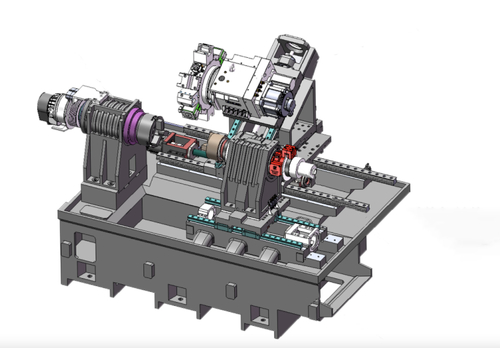
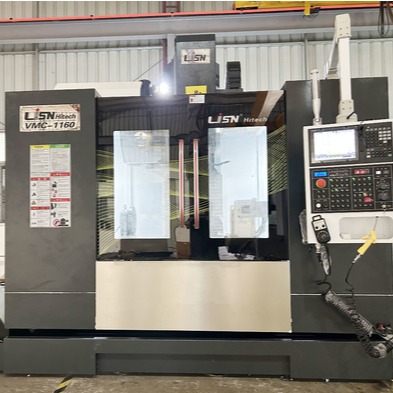
The machine tool is the physical part of the CNC machine that performs the actual machining operations. This can include milling machines, lathes, drilling machines, etc. Each type of machine tool is designed to perform specific machining tasks.
4.3 Drive System
The drive system is responsible for moving the machine's axes. It consists of motors, such as servo motors, and other mechanical components like ball screws and linear guides. The drive system ensures smooth and precise movement of the axes according to the instructions from the CNC controller.
4.4 Tooling
Tooling refers to the cutting tools used by the CNC machine. These can include end mills, drills, lathe tools, etc. The choice of tooling depends on the material being machined and the specific machining operation required.

5. Advantages of CNC Machining
5.1 High Precision
CNC machines can achieve extremely high precision, often within a few microns. This level of precision is difficult to achieve with manual machining, making CNC machines ideal for industries that require high-tolerance parts, such as aerospace and medical device manufacturing.
5.2 Consistency
Once a program is set up, a CNC machine can produce identical parts repeatedly. This ensures consistency in the quality of the products, reducing the risk of human-error-induced variations.
5.3 Efficiency
CNC machines can operate continuously for long periods without breaks, except for maintenance and tool changes. They can also perform multiple operations in one setup, reducing the overall production time compared to traditional machining methods.
5.4 Complex Shapes
CNC machines can create complex shapes that would be very difficult or even impossible to produce manually. This allows for greater design freedom in product development.

6. Future Trends in CNC Machines
6.1 Integration with Artificial Intelligence
In the future, we can expect CNC machines to be integrated with artificial intelligence. AI can be used to optimize the machining process, predict maintenance needs, and even adjust the machining parameters in real time based on the condition of the workpiece and the machine.
6.2 Additive Manufacturing Integration
There is also a trend towards integrating CNC machining with additive manufacturing (3D printing). This combination could allow for the creation of more complex and functional parts, leveraging the strengths of both subtractive (CNC machining) and additive manufacturing processes.
6.3 Miniaturization and Portability
With the development of technology, we may see more miniaturized and portable CNC machines in the future. These could be useful for small-scale manufacturing, prototyping, and even DIY applications.
Conclusion
In conclusion, CNC machines have come a long way since their inception. They have revolutionized the manufacturing industry with their high precision, efficiency, and versatility. Companies like Dongguan Lizhun Machinery Co., LTD are driving innovation in this field, and emerging technologies like LiSN could potentially open up new possibilities for the future of CNC machine operations. As we look ahead, the future of CNC machines seems bright, with continuous advancements in technology promising even more efficient and precise manufacturing processes.

How Much Does A CNC Machine Cost
When Was The First CNC Machine Developed
Related Article
Poor surface finish, inconsistent dimensions, vibration, or an unexpected stop doesn’t always mean something is wrong with your CNC lathe. Worn tooling, poor workholding, and unsuitable cutting parameters can cause many of the same symptoms.
Common problems and solutions for CNC lathes
How to Choose a CNC Lathe for Shaft Machining: A Guide to Types, Models, Materials, and Machining Capacity