What Is 5-axis CNC Type
author: Yannis
2025-05-28

Cultivated in CNC Machine Industry for 20+ years.
Specializing in CNC Milling, Drilling, Turning, Tapping, and so on...
Self-created Brand LiSN for 10+ Years



What Is 5-axis CNC Type
In the realm of advanced CNC (Computer Numerical Control) machining, 5-axis CNC machines represent the pinnacle of precision and versatility. Unlike their 3-axis counterparts, 5-axis systems integrate two additional rotational axes to tackle complex geometries, but the technology itself encompasses distinct types, each tailored to specific manufacturing needs. This blog explores the key 5-axis CNC types, their mechanical configurations, and how they redefine production capabilities across industries.

Defining 5-axis CNC Types by Mechanical Configuration
The classification of 5-axis CNC machines primarily hinges on how their rotational axes are implemented, with each type offering unique advantages based on part size, complexity, and production requirements. At their core, all 5-axis systems combine three linear axes (X, Y, Z) with two rotational axes, but the arrangement of these rotational axes—whether they act on the spindle head or the workpiece table—shapes their functionality. Understanding these types is essential for manufacturers seeking to leverage 5-axis technology effectively.

Table-Type 5-axis CNC Machines: Power and Versatility for Larger Parts
Table-type 5-axis CNC machines feature rotational axes integrated into the workpiece table, making them ideal for machining larger components. In this configuration, the table itself rotates around the Y-axis (B-axis) and tilts around the X-axis (A-axis), while the spindle remains fixed along the X, Y, Z lin, ar paths. This design allows heavy or oversized parts—such as aircraft wing sections or industrial molds, to be securely mounted on the table, which then moves to present different surfaces to the stationary tool.
The advantage of table-type machines lies in their stability: the fixed spindle reduces vibration, ensuring precision even for large-scale machining. For example, a table-type 5-axis CNC machine can mill complex contours into a helicopter rotor hub, a part too massive for smaller setups. Additionally, this type simplifies workpiece loading for large parts, as the table can be accessed from multiple sides, streamlining production in industries like aerospace and heavy equipment manufacturing.

Head-Type 5-axis CNC Machines: Precision for Intricate Details
Conversely, head-type 5-axis CNC machines place the rotational axes on the spindle head rather than the table. Here, the spindle tilts around the X-axis (A-axis) and rotates around the Y-axis (B-axis), while the workpiece remains fixed on the table. This configuration is perfect for smaller, more intricate parts that require fine details, such as medical implants, turbine blades, or high-performance automotive components.
The head-type design offers superior agility, as the lighter spindle can make rapid, precise movements to access complex angles. For instance, machining a dental implant with micro-textured surfaces for osseointegration demands the fine control of a head-type 5-axis CNC machine. The fixed workpiece also minimizes setup errors, as there’s no need to reposition the part during machining—critical for maintaining the tight tolerances required in medical or aerospace applications.

Gantry-Style 5-axis CNC Machines: Scale and Stability for Massive Projects
A specialized subset of table-type machines, gantry-style 5-axis CNC systems are designed for exceptionally large workpieces. These machines feature a bridge-like gantry structure that spans the workspace, with the spindle head moving along the gantry’s rails (X-axis), while the table handles Y and Z movements. The rotational axes (A and B) are typically integrated into the table or spindle head, depending on the design.
Gantry-style machines excel in industries like shipbuilding or architectural manufacturing, where components such as large structural beams or custom facade panels need precise machining. Their robust frame ensures minimal vibration even when cutting hard materials like steel or concrete, while the expansive workspace accommodates parts that would overwhelm standard table-type machines. A gantry-style 5-axis CNC machine, for example, can carve complex patterns into a massive marble slab for a luxury building’s interior, combining artistry with structural precision.

Horizontal 5-axis CNC Machines: Efficiency for Multi-Sided Machining
Horizontal 5-axis CNC machines distinguish themselves by their spindle orientation, which lies parallel to the ground (horizontal), unlike the vertical orientation of most table or head-type machines. This design often features a rotating table (B-axis) and a tilting spindle head (A-axis), allowing for efficient multi-sided machining without repositioning the workpiece.
The horizontal configuration is ideal for parts that require machining on multiple faces, such as engine blocks with internal channels or complex valve bodies. By rotating the table, the machine can expose all sides to the spindle in a single setup, reducing cycle times and improving accuracy. For example, a horizontal 5-axis CNC machine can mill the top, sides, and internal cavities of a transmission housing in one operation, a task that would require multiple setups on a vertical machine. This type is particularly popular in automotive and heavy machinery production, where efficiency and repeatability are paramount.

Hybrid 5-axis CNC Machines: Merging Technologies for Innovation
As manufacturing demands evolve, hybrid 5-axis CNC machines have emerged, combining 5-axis machining with other technologies like additive manufacturing (3D printing) or laser cutting. These systems can both remove material (subtractive manufacturing) and add material (additive manufacturing) in a single setup, enabling the production of complex parts with integrated features that were once impossible.
For instance, a hybrid 5-axis CNC machine might first 3D print a titanium bracket with lightweight lattice structures, then switch to 5-axis milling to refine the mating surfaces and add precise holes. This fusion of technologies reduces part complexity, minimizes assembly steps, and enhances material efficiency—critical in industries like aerospace, where every gram of weight saved matters. Hybrid machines represent the cutting edge of 5-axis technology, blurring the lines between different manufacturing processes.

Choosing the Right 5-axis CNC Type for Your Needs
Selecting the appropriate 5-axis CNC machine type depends on factors like part size, material, complexity, and production volume:
- Table-Type: Opt for large parts, heavy materials, and stability.
- Head-Type: Choose for intricate details, small parts, and high-precision needs.
- Gantry-Style: Ideal for oversized components in construction or aerospace.
- Horizontal: Best for multi-sided machining and high-volume production.
- Hybrid: Suited for innovative designs requiring both additive and subtractive steps.
By matching the machine type to the application, manufacturers can unlock the full potential of 5-axis CNC technology, from producing medical devices with micrometer precision to crafting aerospace components that withstand extreme conditions.

Conclusion
The world of 5-axis CNC machines is diverse, with each type offering unique capabilities tailored to specific manufacturing challenges. Whether it’s the stability of a table-type machine, the precision of a head-type system, or the innovation of a hybrid model, 5-axis CNC technology continues to redefine what’s possible in modern manufacturing. As industries demand more complex, efficient, and sustainable production methods, understanding these machine types becomes essential for driving innovation and staying competitive in a rapidly evolving landscape.


What Are The Benefits of 5-axis CNC Machining
What Is The 5-axis Concept
Related Article
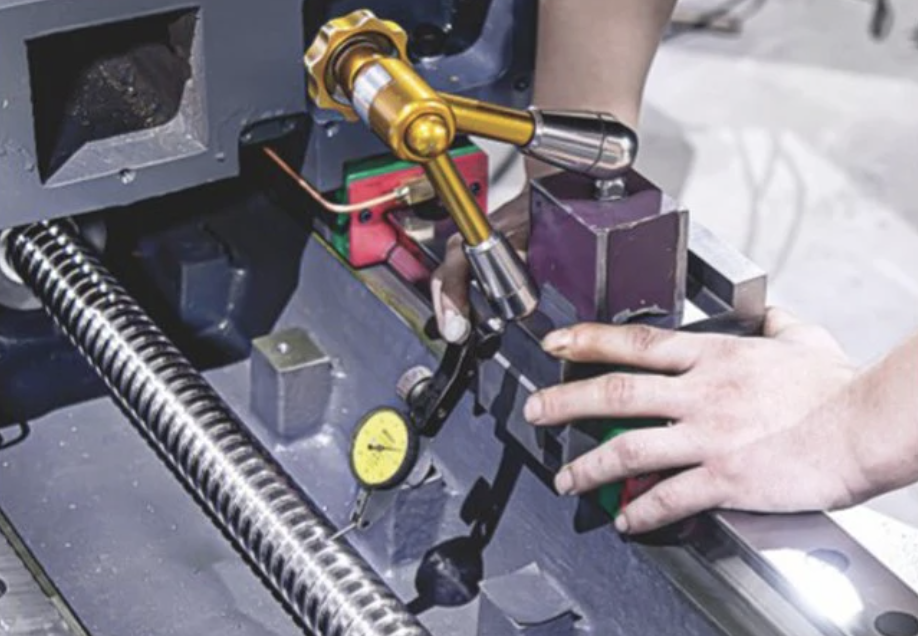
Poor surface finish, inconsistent dimensions, vibration, or an unexpected stop doesn’t always mean something is wrong with your CNC lathe. Worn tooling, poor workholding, and unsuitable cutting parameters can cause many of the same symptoms.
Common problems and solutions for CNC lathes
How to Choose a CNC Lathe for Shaft Machining: A Guide to Types, Models, Materials, and Machining Capacity