
What Is A 5-axis Machining Center
author: Yannis
2025-05-27


Cultivated in CNC Machine Industry for 20+ years.
Specializing in CNC Milling, Drilling, Turning, Tapping, and so on...
Self-created Brand LiSN for 10+ Years



What Is A 5-axis Machining Center
In modern CNC (Computer Numerical Control) machining, the 5-axis machining center stands as a pinnacle of technological innovation. Unlike traditional 3-axis CNC machines, 5-axis systems offer unparalleled flexibility and precision, revolutionizing how complex parts are manufactured. This blog delves into what a 5-axis machining center is, how it works, its key advantages, and why it has become indispensable in industries demanding intricate designs.

Defining the 5-axis Machining Center
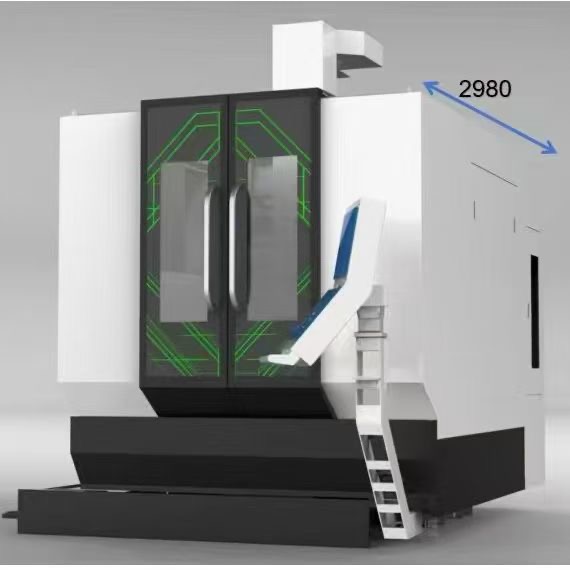
A 5-axis machining center is a sophisticated CNC machine that enables simultaneous movement along five distinct axes: typically the X, Y, and Z linear axes, plus two rotational axes (often A and B or B and C). This combination allows the cutting tool or workpiece to move in multiple directions, accessing complex geometries that are impossible with 3-axis CNC machines. For example, while a 3-axis mill can only machine surfaces perpendicular to the tool axis, a 5-axis center can tilt the tool or rotate the workpiece to reach angles and contours that were once unachievable.
The rotational axes on a 5-axis machine can take different forms: some feature a tilting head (A-axis) and a rotating table (B-axis), while others use a dual-tilting head design. This versatility makes 5-axis machining centers ideal for producing parts with complex curves, undercuts, and multi-sided features—think aerospace turbine blades, medical implants, or high-performance automotive components.

How 5-axis Machining Centers Work
The magic of a 5-axis machining center lies in its ability to coordinate movements across all five axes in real time. Here’s a breakdown of its operational principles:
Axis Configuration
Most 5-axis CNC machines use one of two configurations:
- Table-Type: The workpiece sits on a rotating table (B-axis) that tilts (A-axis), while the spindle moves along X, Y, Z. This is ideal for large parts like aircraft panels.
- Head-Type: The spindle head tilts (A-axis) and rotates (B-axis), while the workpiece remains fixed on the table. This suits smaller, intricate parts like mold cores.
Programming Complexity
Operating a 5-axis machining center requires advanced CNC programming skills. Engineers use specialized Computer-Aided Manufacturing (CAM) software to generate toolpaths that account for the extra rotational movements. For instance, when machining a helicopter rotor blade, the CAM software calculates how the tool must tilt and rotate to follow the blade’s airfoil shape while maintaining optimal cutting angles, a task impossible with 3-axis CNC machines.
Toolpath Optimization
5-axis machining allows for shorter, more efficient toolpaths. By tilting the tool, engineers can use shorter cutting tools, reducing vibration and improving surface finish. For example, a 5-axis mill can machine a deep cavity in a single pass by tilting the tool, whereas a 3-axis machine would require multiple shallow passes, increasing cycle time.

Key Advantages of 5-axis Machining Centers
Unmatched Geometric Flexibility
5-axis CNC machines excel at producing parts with complex geometries:
- Undercuts: Machining features where the tool would clash with the workpiece on a 3-axis machine, such as the interior of a turbine housing.
- Sculpted Surfaces: Creating smooth, contoured surfaces like those on medical implants that need to match human anatomy precisely.
- Multi-Sided Parts: Machining all sides of a part in one setup, eliminating the need to reposition the workpiece—a common requirement for aerospace brackets.
Improved Precision and Surface Finish
The ability to keep the cutting tool perpendicular to the workpiece surface throughout the operation ensures consistent chip load and reduced tool wear. This results in tighter tolerances (often ±0.005mm) and better surface finishes (down to Ra 0.8μm). For example, a 5-axis machined aerospace component might require a surface finish that minimizes air resistance, achievable only with the precise tool positioning of a 5-axis CNC machine.
Reduced Setup Times
Traditional 3-axis machining often requires multiple setups to machine different sides of a part, leading to accumulated errors. A 5-axis machining center can complete all operations in a single setup, improving accuracy and reducing labor costs. For instance, producing a motor housing with integrated mounting flanges and internal channels can be done in one setup on a 5-axis machine, whereas a 3-axis machine might need three separate setups.

Challenges and Considerations
Higher Initial Investment
5-axis machining centers are more expensive than 3-axis CNC machines, with prices starting at $100,000 for entry-level models. This makes them a significant investment for small manufacturers.
Skilled Labor Requirement
Operating a 5-axis CNC machine demands highly skilled programmers and operators. Training teams to master complex CAM software and troubleshoot 5-axis toolpaths can be time-consuming.
Programming Complexity
As mentioned, programming a 5-axis machine requires advanced CAM skills. Engineers must account for tool orientation, collision avoidance, and optimal cutting strategies, which can take longer than programming 3-axis jobs.

The Future of 5-axis Machining
The rise of Industry 4.0 is transforming 5-axis machining:
- AI-Optimized Toolpaths: Machine learning algorithms are starting to optimize 5-axis toolpaths automatically, reducing programming time.
- IoT Integration: Smart sensors on 5-axis CNC machines monitor tool wear and machine health in real time, enabling predictive maintenance.
- Hybrid Manufacturing: Combining 5-axis machining with additive manufacturing (3D printing) in a single machine, allowing both material removal and deposition for complex parts.
Conclusion
A 5-axis machining center is more than just a CNC machine; it’s a gateway to manufacturing possibilities once thought impossible. By enabling precise, multi-axis movement, these systems drive innovation in industries that demand complex, high-performance parts. While they come with challenges, their ability to reduce setup times, improve precision, and unlock geometric creativity makes them indispensable in modern manufacturing. As technology advances, 5-axis machining will only become more accessible and powerful, shaping the future of CNC manufacturing.


What Are the Benefits of 5-axis Machining
What Is The CNC Process In Manufacturing
Related Article

Poor surface finish, inconsistent dimensions, vibration, or an unexpected stop doesn’t always mean something is wrong with your CNC lathe. Worn tooling, poor workholding, and unsuitable cutting parameters can cause many of the same symptoms.
Common problems and solutions for CNC lathes

How to Choose a CNC Lathe for Shaft Machining: A Guide to Types, Models, Materials, and Machining Capacity

