
What is a CNC Milling Machine?
author: LiSN
2025-09-05
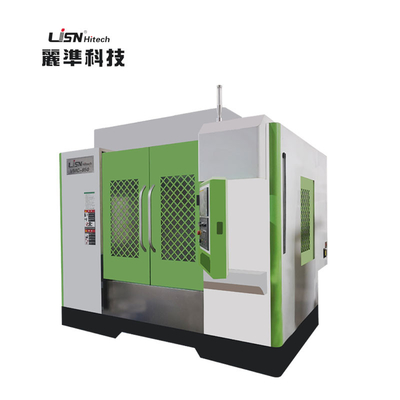
1. Definition and Core Working Principle
A CNC milling machine is a subtractive manufacturing tool that removes material from a workpiece using rotating cutting tools (such as end mills, drills, or routers), guided by pre-programmed computer instructions. Unlike manual milling, where operators adjust handles and dials, the CNC milling machine automates movements along multiple axes (typically 3 to 5 axes), ensuring consistent results even for intricate designs. The core components include a spindle (to hold cutting tools), a worktable (to secure the workpiece), and a CNC controller that interprets G-code (the standard programming language for CNC machines).
2. Main Types of CNC Milling Machines
CNC milling machines come in various configurations to suit different manufacturing needs. The most common types include:
- Vertical CNC Milling Machine: Features a spindle that rotates vertically, making it ideal for simple to moderately complex parts like brackets and housings. It’s compact and widely used in small to medium-sized workshops.
- Horizontal CNC Milling Machine: Has a horizontally oriented spindle, often paired with a rotary table. This design excels at machining deep cavities and multi-sided parts, such as engine blocks, and is common in automotive and aerospace production.
- Gantry CNC Milling Machine: Characterized by a bridge-like structure (gantry) that supports the spindle. It’s designed for large workpieces, such as mold plates or structural components for construction, offering stability for heavy-duty cutting.
- 5-Axis CNC Milling Machine: The most versatile type, capable of moving the workpiece or spindle along five axes simultaneously. It’s used for highly complex parts like turbine blades and medical implants, where precision across multiple angles is critical.
3. What Products Can a CNC Milling Machine Manufacture?
The CNC milling machine’s flexibility allows it to process a wide range of materials—including metals (aluminum, steel, titanium), plastics (ABS, PEEK), wood, and composites—and produce parts for nearly every industry. Below are key application areas and examples:
3.1 Aerospace Industry
Aerospace demands lightweight, high-strength parts with tight tolerances. CNC milling machines produce components like turbine blades (from titanium), aircraft structural brackets, wing ribs, and cockpit instrument housings. The 5-axis variant is particularly vital here, as it can machine the complex curves and angles required for aerodynamic performance.
3.2 Automotive Industry
From engine parts to interior components, the automotive sector relies heavily on CNC milling machines. Examples include cylinder heads, crankshafts, gearbox casings, and dashboard frames. These machines enable mass production of consistent parts, supporting assembly line efficiency.
3.3 Medical Device Industry
Precision is non-negotiable in medical manufacturing, and CNC milling machines deliver parts like surgical instruments (scalpels, forceps), orthopedic implants (knee replacements, spinal rods), and diagnostic equipment components (MRI scanner parts). Biocompatible materials like stainless steel and titanium are commonly processed here.
3.4 Electronics Industry
Miniaturization is key in electronics, and CNC milling machines create small, precise parts such as printed circuit board (PCB) enclosures, connector housings, and smartphone frames. They also machine heat sinks for computers and LED components, ensuring efficient heat dissipation.
what is cnc lathe machine?
What Is Drilling In CNC Machine
Related Article

Poor surface finish, inconsistent dimensions, vibration, or an unexpected stop doesn’t always mean something is wrong with your CNC lathe. Worn tooling, poor workholding, and unsuitable cutting parameters can cause many of the same symptoms.
Common problems and solutions for CNC lathes

How to Choose a CNC Lathe for Shaft Machining: A Guide to Types, Models, Materials, and Machining Capacity

