What Is Called CNC
author: Yannis
2025-03-24
What Is Called CNC
In the dynamic realm of modern manufacturing, CNC has emerged as a revolutionary technology that has transformed the way products are made. But what exactly is CNC? Let's delve into this fascinating topic.

Understanding the Basics of CNC
CNC stands for Computer Numerical Control. At its core, it is a system that uses computers to control machine tools. Instead of relying on manual labor to operate machinery, CNC systems interpret pre - written codes to execute precise movements. This technology has been a game - changer, allowing for enhanced accuracy, repeatability, and efficiency in manufacturing processes.

CNC and CNC Machines
Types of CNC Machines
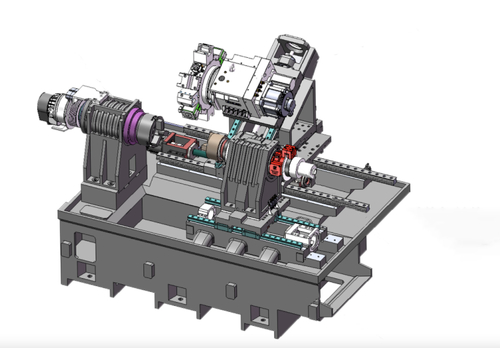
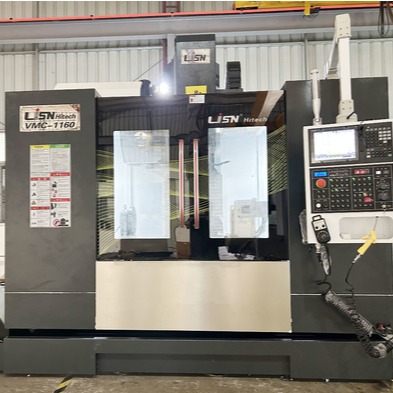
CNC machines are the physical manifestations of CNC technology. There are several types, each designed for specific manufacturing tasks. One of the most well-known is the CNC lathe. A CNC lathe is a machine that rotates a workpiece while cutting tools are applied to shape it. Other types include CNC mills, which use rotary cutters to remove material from a workpiece, and CNC routers, often used for cutting and shaping wood, plastic, and other materials.
Functionality of CNC Machines
All CNC machines share a common trait: they are controlled by a computer program. This program, typically written in a language like G - code, instructs the machine on how to move its axes, control the speed of the spindle, and operate the cutting tools. For example, in a CNC lathe, the program will determine the rotation speed of the workpiece, the depth and angle at which the cutting tool is applied, and the movement of the tool along the X and Z axes.

How CNC Works
The Programming Process
The first step in using CNC technology is programming. Skilled programmers create a set of instructions based on the design of the part to be manufactured. They use computer-aided design (CAD) software to create a 3D model of the part, which is then translated into a machine-readable code using computer-aided manufacturing (CAM) software. This code contains all the information about the movements of the machine, such as the starting and ending positions of the cutting tools, the feed rates, and the spindle speeds.
Machine Execution
Once the program is loaded into the CNC machine's control unit, the machine springs into action. The control unit reads the code line by line and sends signals to the motors that drive the axes of the machine. These motors precisely move the cutting tools and the workpiece according to the programmed instructions. For instance, in a CNC lathe, the motors will rotate the spindle and move the tool turret to perform operations like turning, threading, and drilling.

Advantages of CNC Technology
Precision
One of the most significant advantages of CNC is its ability to achieve high precision. CNC machines can produce parts with tolerances as small as a few thousandths of an inch. This level of accuracy is crucial in industries such as aerospace and medical device manufacturing, where even the slightest deviation can have serious consequences.
Repeatability
CNC technology ensures consistent results. Once a program is written, the CNC machine can repeat the same operations over and over again with identical results. This is a huge advantage in mass production, as it guarantees that every part is of the same high quality.
Efficiency
CNC machines can operate continuously, often with minimal operator intervention. They can work at high speeds, reducing production time significantly. For example, a CNC lathe can produce multiple parts in a fraction of the time it would take a manual lathe operator.

Applications of CNC in Different Industries
Aerospace Industry
In the aerospace industry, CNC technology is used extensively. CNC machines are used to manufacture critical components such as turbine blades, engine parts, and aircraft structural components. The high precision and reliability of CNC are essential for ensuring the safety and performance of aircraft.
Automotive Industry
The automotive industry relies heavily on CNC for the production of parts such as engine blocks, transmission components, and brake parts. CNC machines enable the mass production of high-quality parts, which is crucial for meeting the demands of the automotive market.
Manufacturing of Consumer Goods
Even in the production of everyday consumer goods, CNC plays a role. From the precision-made components in electronics to the stylishly designed parts in furniture, CNC technology helps create products that are both functional and aesthetically pleasing.

Conclusion
In conclusion, CNC is much more than just a technological acronym. It represents a fundamental shift in the manufacturing process, enabling greater precision, repeatability, and efficiency. Whether it's a CNC lathe in a small machine shop or a complex CNC machining center in a large factory, CNC technology is driving innovation across a wide range of industries. As technology continues to advance, we can expect CNC to become even more sophisticated and integral to the manufacturing landscape.


What Does CNC Work Stand For
What Does A CNC Lathe Operator Do
Related Article
Poor surface finish, inconsistent dimensions, vibration, or an unexpected stop doesn’t always mean something is wrong with your CNC lathe. Worn tooling, poor workholding, and unsuitable cutting parameters can cause many of the same symptoms.
Common problems and solutions for CNC lathes
How to Choose a CNC Lathe for Shaft Machining: A Guide to Types, Models, Materials, and Machining Capacity