What Is CNC In A Car
author: Yannis
2025-03-20
What Is CNC In A Car
In the complex and highly-regulated world of automotive manufacturing, CNC (Computer Numerical Control) technology has emerged as a cornerstone. It has redefined the precision, efficiency, and quality of car production. This blog post delves deep into understanding what CNC is in the context of car manufacturing, how CNC machines are utilized, and their far - reaching impact on the automotive industry.

CNC Basics in Automotive Manufacturing
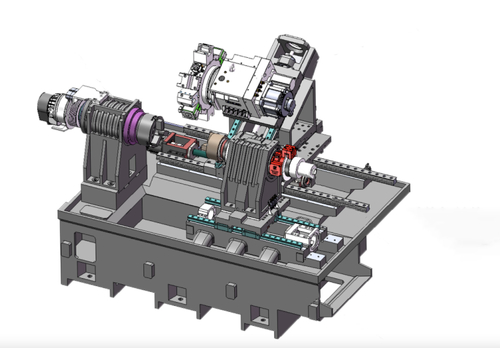
CNC technology, at its core, is the use of computer-controlled systems to operate machine tools. In a car factory, instead of relying on manual dexterity to shape and form parts, pre-programmed instructions take charge. These instructions, often in the form of G - code, are fed into CNC machines. The computer within the machine then translates these codes into electrical impulses. These impulses are sent to the motors of the machine, which precisely control the movement of cutting tools, drills, or other machining elements. This automation ensures that each part produced adheres to strict design specifications, making CNC an indispensable part of modern car manufacturing.

How CNC Machines Function in Car Production
Control Unit Operations
The control unit of a CNC machine in a car factory is like its brain. It is a specialized computer that reads the CNC program line by line. As it interprets the G-code instructions, it converts them into electrical signals. For example, if the program dictates that a drill bit should move 5 millimeters to the right and 3 millimeters down to create a hole in an engine block, the control unit calculates the exact electrical signals needed to drive the motors responsible for those movements.
Drive Systems in Action
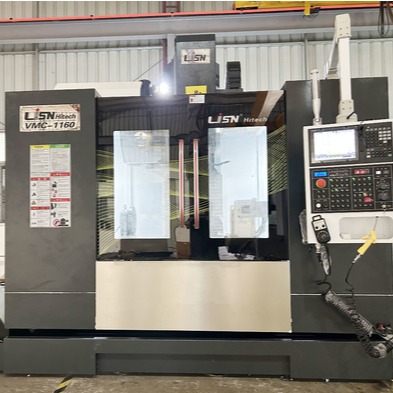
CNC machines in automotive production typically have multiple axes of movement, with the X, Y, and Z axes being the most common. These axes correspond to the length, width, and height directions. Servo motors or stepper motors, integral parts of the drive systems, receive the electrical signals from the control unit. They then rotate lead screws or belts. In a CNC milling machine used to shape a car's transmission housing, the spindle holding the cutting tool moves along these axes. The precise rotation of the motors ensures that the cutting tool removes material in the exact pattern required to create the complex internal and external geometries of the housing.
Feedback Systems for Precision
To guarantee the highest level of accuracy in car part manufacturing, CNC machines often incorporate feedback systems. Encoders, a prevalent feedback device, are attached to the motors or axes of the machine. They continuously monitor the position of moving components. Suppose a CNC lathe is machining a car axle. If the encoder detects that the cutting tool has deviated slightly from the programmed path, it immediately sends a signal back to the control unit. The control unit then adjusts the motor's rotation to correct the error, ensuring that the axle is machined to the exact specifications required for smooth operation within the car's drivetrain.

Applications of CNC in Different Car Components
Engine Components
CNC technology is extensively used in the production of engine components. Engine blocks, cylinder heads, and pistons are all machined with CNC machines. The precise machining of engine blocks ensures proper fitment of cylinders, pistons, and other internal components. This, in turn, improves engine efficiency, reduces vibrations, and increases the overall lifespan of the engine. For example, in modern hybrid and electric cars, where space and weight are critical factors, CNC-machined engine components are designed to be as compact and lightweight as possible without sacrificing performance.
Transmission Parts
CNC machines are essential for manufacturing transmission parts such as gears, shafts, and housings. The high precision of CNC machining ensures smooth gear meshing, which is crucial for efficient power transfer. In modern automatic transmissions, where gear shifting needs to be seamless and precise, CNC-machined parts enable the complex gear arrangements and tolerances required. The ability to produce consistent, high-quality transmission parts also contributes to reducing noise and wear within the transmission system.
Body and Chassis Parts
In the production of car body and chassis parts, CNC technology is used for cutting, drilling, and shaping metal sheets. CNC milling and laser cutting machines are used to create parts like door frames, chassis cross-members, and body panels. The precise cutting and shaping of these parts ensure a perfect fit during assembly, improving the structural integrity of the car. In addition, CNC-machined body parts can be designed with complex shapes and curves, which not only enhance the aesthetic appeal of the car but also contribute to better aerodynamics, reducing drag and improving fuel efficiency.

Advantages of CNC in Car Manufacturing
Precision and Quality
One of the most significant advantages of CNC in car production is the high level of precision it offers. CNC machines can consistently produce parts with tolerances that are far beyond what is achievable through manual machining. This precision ensures that every car part fits together perfectly, resulting in a more reliable and high-performing vehicle. Whether it's the fit of a piston within a cylinder or the alignment of a door on a car body, the quality control provided by CNC technology is unparalleled.
Efficiency and Productivity
CNC machines can operate continuously, 24/7 if required. Once the CNC program is set up, the machine can produce parts without the need for constant operator intervention. This significantly increases productivity. In a large-scale car factory, where thousands of parts need to be produced daily, the ability of CNC machines to work around the clock, with quick tool changes and rapid movement between operations, helps in meeting tight production schedules. Additionally, the automation provided by CNC reduces the risk of human-error-related delays, further enhancing overall efficiency.
Design Flexibility
CNC technology offers great design flexibility in car manufacturing. Designers can create complex and innovative car part designs, and these designs can be easily translated into CNC programs. If there is a need to modify a part design, perhaps to improve performance or incorporate new features, all that is required is to update the CNC program. This flexibility allows car manufacturers to quickly adapt to changing market demands, technological advancements, and safety regulations. For example, as new safety features are developed, CNC-machined parts can be redesigned and produced rapidly to integrate these features into new car models.

Future of CNC in the Automotive Industry
As the automotive industry continues to evolve, driven by trends such as electric and autonomous vehicles, CNC technology is set to play an even more significant role. With the increasing demand for lightweight materials in electric cars to improve battery range, CNC machines will be required to machine new and complex materials such as carbon fiber composites. The integration of CNC with advanced manufacturing technologies like 3D printing and robotics is also on the horizon. This integration will lead to more efficient and flexible production processes. In the era of autonomous driving, where the precision of sensors and actuators is crucial, CNC-machined components will ensure the accurate manufacturing of these critical parts, contributing to the safe and reliable operation of self - driving cars.
In conclusion, CNC technology has become an integral and irreplaceable part of car manufacturing. Its ability to deliver precision, efficiency, and design flexibility has transformed the automotive industry, and as we look towards the future, CNC will continue to be at the forefront of innovation in car
production.


What Is A CNC Lathe
What Is CNC In Factory
Related Article
Poor surface finish, inconsistent dimensions, vibration, or an unexpected stop doesn’t always mean something is wrong with your CNC lathe. Worn tooling, poor workholding, and unsuitable cutting parameters can cause many of the same symptoms.
Common problems and solutions for CNC lathes
How to Choose a CNC Lathe for Shaft Machining: A Guide to Types, Models, Materials, and Machining Capacity