What Is CNC In Manufacturing
author: Yannis
2025-03-19
What Is CNC In Manufacturing
In the ever-evolving world of manufacturing, CNC (Computer Numerical Control) has emerged as a revolutionary technology that has transformed the way products are made. This blog post will delve deep into what CNC is, how CNC machines operate, the role of CNC manufacturers, and its wide-ranging applications in modern manufacturing.

1. Understanding CNC
CNC is a technology that uses pre-programmed computer software to control the movement of factory tools and machinery. Instead of relying on manual operation, which is often labor-intensive and prone to human error, CNC systems automate the manufacturing process. This allows for highly precise and repeatable production, making it possible to create complex parts and products with consistent quality.
The concept of CNC was first introduced in the 1950s as a way to improve the accuracy and efficiency of machine tools. Since then, it has undergone significant advancements, becoming an integral part of modern manufacturing across various industries.
2. How CNC Machines Work
2.1 The Control System
At the heart of every CNC machine is its control system. This system interprets the instructions from the pre-programmed software, which is typically written in a language like G-code. The control system then sends signals to the machine's motors and actuators, telling them how to move the cutting tools or other components.
2.2 Axis Movement
CNC machines are capable of moving along multiple axes. The most common are the X, Y, and Z axes, which represent the three-dimensional space. For example, in a CNC milling machine, the cutting tool can move in any combination of these axes to create the desired shape on the workpiece. Some advanced CNC machines even have additional axes, such as rotational axes (A, B, C), which enable more complex machining operations.
2.3 Tooling and Workholding
To perform machining operations, CNC machines use a variety of cutting tools. These tools are carefully selected based on the material being processed and the type of operation required, such as drilling, milling, or turning. Workholding devices, such as vices or chucks, are used to secure the workpiece in place during machining, ensuring accurate positioning and stability.

3. Types of CNC Machines
3.1 CNC Milling Machines
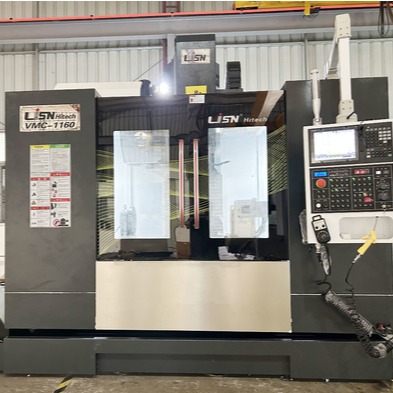
CNC milling machines are one of the most versatile types of CNC machines. They can be used to create a wide range of shapes by removing material from a workpiece using rotating cutting tools. Milling operations can include face milling, end milling, and contour milling, among others. These machines are commonly used in industries such as aerospace, automotive, and mold - making.
3.2 CNC Lathes
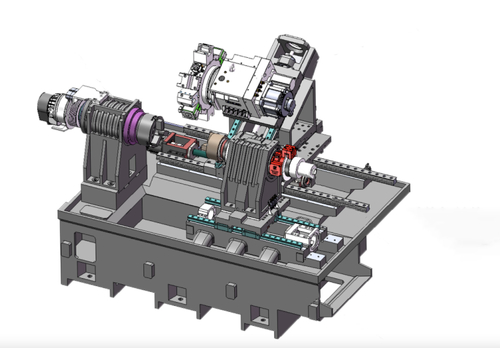
CNC lathes are used for turning operations. In a CNC lathe, the workpiece rotates while the cutting tool moves along the X and Z axes (in a two-axis lathe) to shape the outer diameter, bore holes, or create threads. CNC lathes are widely used in the production of cylindrical parts, such as shafts and bushings.
3.3 CNC Grinding Machines
CNC grinding machines use abrasive wheels to remove material from a workpiece, resulting in a smooth and precise surface finish. They are often used in applications where high-precision and surface quality are crucial, such as in the manufacturing of bearings and gears.

4. The Role of CNC Manufacturers
CNC manufacturers play a vital role in the adoption and advancement of CNC technology. These manufacturers design, develop, and produce a wide range of CNC machines to meet the diverse needs of the manufacturing industry.
4.1 Machine Design and Engineering
CNC manufacturers invest significant resources in research and development to design machines that are not only accurate and efficient but also user-friendly. They use advanced engineering techniques to optimize the machine's structure, performance, and reliability.
4.2 Quality Control and Certification
To ensure that their CNC machines meet the highest standards of quality, CNC manufacturers implement strict quality control measures. This includes rigorous testing of components and the final machine assembly. Many manufacturers also obtain certifications, such as ISO 9001, to demonstrate their commitment to quality.
4.3 Customer Support and Training
In addition to producing high - quality machines, CNC manufacturers provide customer support and training services. They help customers select the right CNC machine for their specific applications and offer training on how to operate and maintain the machines. This support is crucial for ensuring that customers can fully utilize the capabilities of their CNC machines and achieve optimal results.

5. Applications of CNC in Manufacturing
5.1 Aerospace Industry
In the aerospace industry, precision and reliability are of utmost importance. CNC machines are used to manufacture critical components such as engine parts, aircraft wings, and landing gear. The high-precision machining capabilities of CNC machines ensure that these components meet the strict quality and safety requirements of the aerospace industry.
5.2 Automotive Industry
The automotive industry also heavily relies on CNC technology. CNC machines are used to produce engine blocks, transmission components, and automotive molds. The ability to mass - produce parts with consistent quality and precision using CNC machines has significantly improved the efficiency and competitiveness of the automotive manufacturing process.
5.3 Medical Device Manufacturing
In medical device manufacturing, CNC technology is used to create highly precise and complex components for devices such as surgical instruments, implants, and prosthetics. The accuracy and repeatability of CNC machines are essential for ensuring the safety and effectiveness of these medical devices.

6. Future Trends in CNC Manufacturing
6.1 Integration with Industry 4.0
As the manufacturing industry moves towards Industry 4.0, CNC machines are expected to be more closely integrated with other smart manufacturing technologies. This includes the use of the Internet of Things (IoT) to collect and analyze data from CNC machines, enabling predictive maintenance and more efficient production planning.
6.2 Advanced Materials Processing
With the development of new and advanced materials, CNC manufacturers are working on machines that can process these materials more effectively. This includes materials such as carbon fiber composites and high - strength alloys, which require specialized machining techniques.
6.3 Automation and Robotics
The future of CNC manufacturing also involves increased automation and the use of robotics. Robots can be integrated with CNC machines to perform tasks such as loading and unloading workpieces, further improving the efficiency and productivity of the manufacturing process.
In conclusion, CNC technology has had a profound impact on the manufacturing industry. From its humble beginnings to its current status as a cornerstone of modern manufacturing, CNC continues to evolve and drive innovation. With the ongoing advancements in technology and the increasing demand for high-quality, precision-made products, the future of CNC in manufacturing looks very promising.


What Is CNC In Product Design
How Are CNC Machines Classified
Related Article
Poor surface finish, inconsistent dimensions, vibration, or an unexpected stop doesn’t always mean something is wrong with your CNC lathe. Worn tooling, poor workholding, and unsuitable cutting parameters can cause many of the same symptoms.
Common problems and solutions for CNC lathes
How to Choose a CNC Lathe for Shaft Machining: A Guide to Types, Models, Materials, and Machining Capacity