What Is It Called Axis in CNC Machining
author: Yannis
2025-06-02

Cultivated in CNC Machine Industry for 20+ years.
Specializing in CNC Milling, Drilling, Turning, Tapping, and so on...
Self-created Brand LiSN for 10+ Years



What Is It Called Axis in CNC Machining
In the technical landscape of CNC (Computer Numerical Control) manufacturing, the term "axis" serves as a fundamental building block for understanding how CNC machines create precise parts. But what exactly is an "axis" in this context, and why does its naming matter? This blog demystifies the concept of axes in CNC machining, exploring their role, nomenclature, and the critical impact they have on manufacturing capabilities.

Defining an Axis in CNC Machining
An "axis" in CNC machining refers to a direction in which a CNC machine can move its cutting tool or workpiece. These axes form the coordinate system that dictates the machine’s movement, enabling it to carve, shape, or drill materials with precision. Think of axes as the invisible guides that transform digital designs into physical objects. Traditional CNC machines start with three primary axes, but advanced systems may incorporate more—each contributing to the machine’s ability to tackle complex geometries.

The Three Fundamental Linear Axes: X, Y, Z
The foundation of any CNC machine lies in its three linear axes, named X, Y, and Z following standard Cartesian coordinates:
- The X-axis controls horizontal movement (left to right) relative to the workpiece.
- The Y-axis manages front-to-back movement, perpendicular to the X-axis.
- The Z-axis dictates vertical movement (up and down), completing the three-dimensional space.
Together, these axes enable a 3-axis CNC machine to create basic 3D shapes, such as blocks, cylinders, or parts with flat surfaces. For example, a 3-axis mill can carve a simple aluminum bracket by moving the tool along X, Y, and Z to cut straight lines and right angles. However, these linear axes alone are limited to machining surfaces that align with their directions, making complex curves or undercuts impossible.

Adding Rotational Axes: Expanding to 4-axis and 5-axis
To overcome the limitations of linear movement, advanced CNC machines incorporate rotational axes, which are named A, B, or C based on their axis of rotation:
- The A-axis rotates around the X-axis, tilting the tool or workpiece up and down.
- The B-axis rotates around the Y-axis, enabling left-to-right tilting.
- The C-axis spins around the Z-axis, providing a full 360° rotation.
A 4-axis CNC machine typically adds a C-axis to the linear X, Y, Z axes , allowing rotational movement for parts like cylindrical gears. A 5-axis machine goes further, integrating two rotational axes (e.g., A and B or B and C) to achieve multi-angle machining. For instance, a 5-axis CNC machine can tilt the tool along the A-axis and rotate it along the B-axis while moving along X, Y, Z, enabling it to carve a turbine blade’s curved airfoil shape in a single setup—something impossible with linear axes alone.

Why Axis Naming Follows Standard Conventions
The standardized naming of axes (X, Y, Z for linear; A, B, C for rotational) is crucial for universal communication in CNC machining. This system ensures that engineers, programmers, and operators worldwide can understand a machine’s capabilities at a glance. For example, specifying a "5-axis CNC machine" immediately signals that the system can control three linear and two rotational axes, enabling complex part production. Without this convention, miscommunication could lead to errors in programming or tool setup, compromising part quality.

The Impact of Axes on Machining Capability
The number and type of axes directly determine what a CNC machine can produce:
- 3-axis machines: Ideal for simple parts with straight lines and right angles, such as basic brackets or panels.
- 4-axis machines: Enable rotational machining for cylindrical parts like shafts or gears.
- 5-axis machines: Unlock complex geometries, allowing undercuts, organic curves, and multi-sided parts in one setup—critical for aerospace components, medical implants, or high-performance automotive parts.
For instance, machining a custom hip implant requires a 5-axis CNC machine to follow the patient’s unique bone contours, while a 3-axis machine would struggle to replicate the necessary curves and tolerances.

Common Misconceptions About Axes in CNC Machining
One frequent misunderstanding is confusing "axis" with "movement type." While linear axes (X, Y, Z) enable straight-line movements, rotational axes (A, B, C) allow tilting or spinning, but both are essential for complex machining. Another 误区 is assuming that more axes always mean better performance; in reality, the choice of axes depends on the part’s complexity. A 3-axis machine may be sufficient for basic parts, while a 5-axis machine is overkill unless intricate angles are required.

Conclusion: Axes as the Blueprint of CNC Capability
In CNC machining, an "axis" is more than a direction of movement—it’s a defining characteristic of a CNC machine’s potential. The standard naming of axes (X, Y, Z for linear; A, B, C for rotational) provides a universal language for manufacturers, while the number of axes directly correlates to the complexity of parts they can produce. From the foundational three linear axes to the advanced capabilities of five-axis systems, each axis expands the boundaries of what’s possible in precision manufacturing. As CNC machines evolve, the concept of axes will remain central to unlocking new frontiers in design and production.


What Is CNC Good For
What Is 5-axis CNC Geometry
Related Article
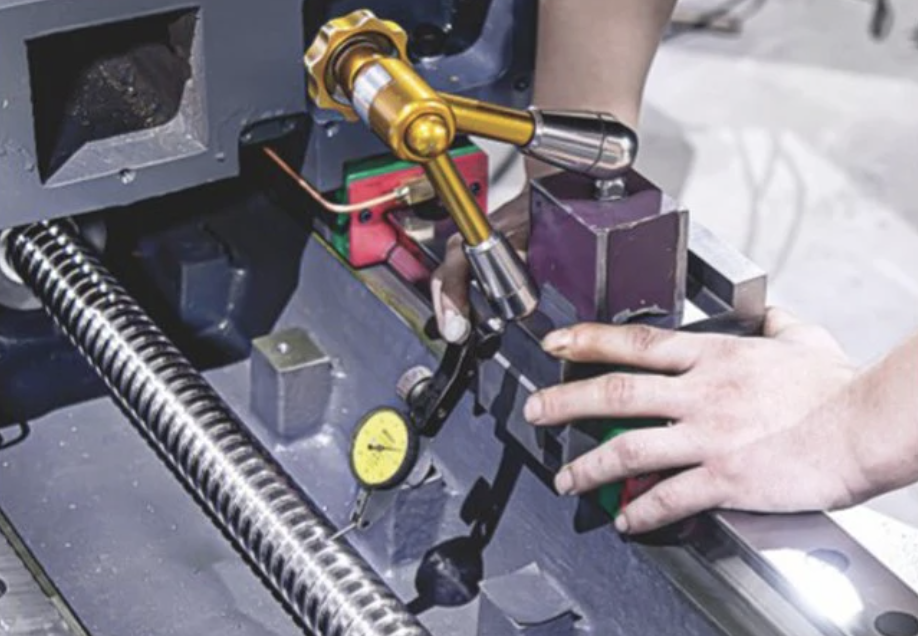
Poor surface finish, inconsistent dimensions, vibration, or an unexpected stop doesn’t always mean something is wrong with your CNC lathe. Worn tooling, poor workholding, and unsuitable cutting parameters can cause many of the same symptoms.
Common problems and solutions for CNC lathes
How to Choose a CNC Lathe for Shaft Machining: A Guide to Types, Models, Materials, and Machining Capacity