
What Is Meant By CNC Machine
author: Yannis
2025-02-23
What Is Meant By CNC Machine
In the fast-paced and highly competitive landscape of modern manufacturing, CNC (Computer Numerical Control) technology has emerged as a game-changer. CNC machines are the vanguards of this technological renaissance. This blog aims to comprehensively explore the concept of CNC machines, delving into their fundamental principles, operational mechanisms, diverse types, remarkable advantages, and the contributions of key players like Dongguan Lizhun Machinery Co., LTD, as well as the potential implications of LiSN in this domain.
1. Decoding the Basics of CNC
1.1 The Essence of CNC
CNC, short for Computer Numerical Control, represents a technological paradigm that harnesses computer-controlled systems to automate the operation of machinery. In manufacturing, a CNC machine is a sophisticated tool that meticulously follows a set of pre-programmed instructions to execute a wide array of machining operations. These instructions, written in a specialized programming language, are seamlessly fed into the machine's control system, acting as a blueprint for the machine's movements.
1.2 Tracing the Origins of CNC
The inception of CNC can be traced back to 1949 when John T. Parsons and Frank L. Stulen while working at MIT, pioneered this revolutionary concept. Their initial motivation was to develop an efficient method for manufacturing helicopter propeller rotary wings as part of a US Air Force contract. Initially, the technology manifested as numerical control (NC), relying on punch cards for movement control. However, with the rapid advancement of computing technology, punch cards were phased out. In 1958, the introduction of G-code marked a significant milestone, integrating computer programming skills into the machining process.

2. Unraveling the Inner Workings of a CNC Machine
2.1 The Core of Programming
The programming aspect lies at the heart of a CNC machine's functionality. Every CNC machine is equipped with an in-built microcontroller, a smart component designed to decipher and interpret the instructions encoded in the CNC program. The program is replete with commands that are then relayed to the relevant machine components, triggering specific movements. For instance, if the program dictates drilling a hole at a precise location on a workpiece, the microcontroller will translate these instructions into coordinated movements of the drill bit along the X, Y, and Z axes of the machine.
2.2 The Multistage Machining Process
2.2.1 Stage 1: Blueprint Creation
Before any machining commences, engineers, designers, or a team of experts create detailed blueprints of the desired part. These blueprints are comprehensive, taking into account the part's geometric features, dimensional specifications, and its intended applications.
2.2.2 Stage 2: CAD Model Generation
The blueprints are then transformed into a digital 2D or 3D model using Computer-Aided Design (CAD) software. The CAD model serves as a virtual representation of the part, providing accurate dimensions, wall thickness, and other critical details, which are essential for the subsequent machining process.
2.2.3 Stage 3: CAD to CAM Conversion
Since CNC machines cannot directly process CAD files, the CAD data needs to be converted into a Computer-Aided Manufacturing (CAM) format. There is a plethora of CAM software available in the market, each designed to translate the design data into a format that the CNC machine can understand and execute.
2.2.4 Stage 4: Machine Configuration
The CAM file is transferred to the CNC machine through dedicated ports on the machine system. Simultaneously, the operator fine-tunes the machine's settings, such as spindle speed, feed rate, and tool selection. The workpiece is securely mounted on the worktable using clamps, and all preliminary checks are carried out to ensure a smooth machining process.
2.2.5 Stage 5: Program Execution
Once all the preparatory steps are completed, the operator initiates the program. The CNC machine reads the instructions and commences moving the machine tools by the program. The program will automatically halt when the machining is completed or if any errors are detected. In case of an emergency, the operator can also intervene and stop the program midway.
2.2.6 Stage 6: Unloading and Inspection
After the program concludes, the operator carefully removes the workpiece from the table and conducts a thorough quality inspection. Depending on the requirements, the workpiece may be subjected to secondary processing to achieve the desired finish and functionality.

3. Diverse Types of CNC Machines
3.1 CNC Drilling Machines
CNC drilling machines are indispensable when materials like aluminum, steel, or plastic require the creation of holes. These machines can be programmed to drill holes with remarkable precision, making them ideal for large-scale drilling operations. Whether it's for creating holes in a printed circuit board or in a large-scale industrial component, CNC drilling machines ensure accuracy and consistency.

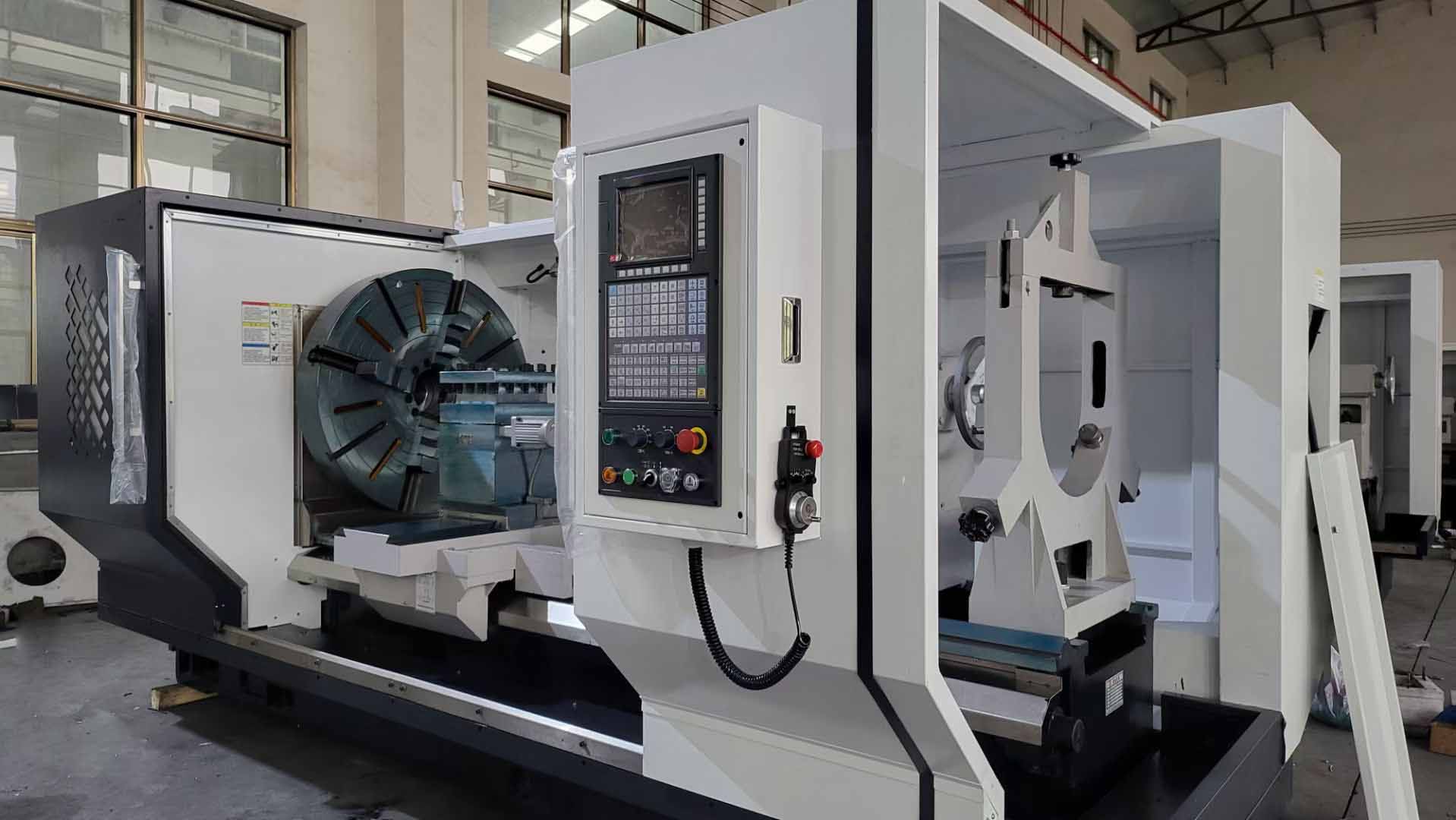
3.2 CNC Lathes
CNC lathes operate in a manner opposite to drills. While a drill rotates the bit and brings it into contact with the material, a lathe rotates the workpiece against a stationary cutting tool. This setup is particularly well-suited for manufacturing spherical, cylindrical, and symmetrical objects. For example, the production of engine shafts or cylindrical gears often relies on CNC lathes.
3.3 CNC Milling Machines
Milling machines are among the most prevalent CNC machines in use today. They utilize rotary cutters to shave, cut, and remove sections of material. CNC milling offers a high degree of programmability, enabling the achievement of exact specifications regarding depth, angle, and direction of cut, far surpassing the capabilities of manual milling. Complex components such as aerospace parts often require the precision of CNC milling.

CNC grinders employ a rotary wheel to abrade the material until it attains the desired shape. They are often favored over lathes for jobs that do not demand an extremely high level of precision, as they are relatively easy to program. Grinding operations are commonly used in the manufacturing of tools, where a smooth finish is required.

3.5 CNC Plasma Cutters
These machines utilize a plasma torch to cut materials, typically metal. By combining compressed air and electrical arcs, CNC plasma cutters can achieve precise and clean cuts through metal materials. They are widely used in the metal fabrication industry, for applications such as cutting steel plates for construction or automotive parts.

4. The Multifaceted Advantages of CNC Machines
4.1 Unparalleled Precision
When it comes to mechanical details, CNC machines offer an almost unrivaled level of precision. Operations such as drilling and 3D carving can be repeated with consistent accuracy, a feat that is extremely challenging to accomplish manually. This precision is crucial in industries like medical device manufacturing, where even the slightest deviation can have significant consequences.
4.2 Exceptional Repeatability
One of the standout advantages of CNC-machined parts is their repeatability. Even during mass production, the use of CNC machines ensures that each part is identical in terms of dimensions and quality. This consistency is highly valued in industries such as automotive manufacturing, where thousands of identical parts need to be produced.
4.3 Round-the-Clock Operational Capabilities
CNC machines can operate 24/7 with minimal breaks and maintenance requirements. This results in reduced downtime and optimized productivity, a significant advantage for manufacturing companies aiming to meet high-volume production demands.
4.4 High-Level Versatility
Most CNC machines are highly versatile. They can perform multiple secondary operations such as lapping, milling, and drilling all from the same machine, allowing for seamless transitions between different processes. This versatility not only saves time but also reduces the need for multiple specialized machines.
4.5 Enhanced Return on Investment (ROI)
Considering all the aforementioned advantages, the adoption of CNC technologies can lead to a substantial reduction in operational costs in the long run. The precision, repeatability, and efficiency of CNC machines contribute to improved productivity and reduced waste, ultimately resulting in an enhanced return on investment.

5. The Prominent Role of Dongguan Lizhun Machinery Co., LTD
Our company is actively engaged in the manufacturing, sales, and after-sales support of a diverse range of CNC machinery. Our products are renowned for their high quality, reliability, and advanced technological features.
Dongguan Lizhun Machinery Co., LTD offers a comprehensive portfolio of CNC machines to cater to the diverse needs of the manufacturing industry. Whether it's for small-scale production runs in a job shop or large-scale industrial manufacturing, our company has tailored solutions. Our commitment to quality is evident in every product they manufacture, and our after-sales support ensures that customers can operate their CNC machines smoothly and efficiently. This support includes technical assistance, spare parts supply, and training programs for operators.

Who Developed The CNC Machine
What Is CNC Machine
Related Article

Poor surface finish, inconsistent dimensions, vibration, or an unexpected stop doesn’t always mean something is wrong with your CNC lathe. Worn tooling, poor workholding, and unsuitable cutting parameters can cause many of the same symptoms.
Common problems and solutions for CNC lathes

How to Choose a CNC Lathe for Shaft Machining: A Guide to Types, Models, Materials, and Machining Capacity

