What Is The 5-axis Concept
author: Yannis
2025-05-28

Cultivated in CNC Machine Industry for 20+ years.
Specializing in CNC Milling, Drilling, Turning, Tapping, and so on...
Self-created Brand LiSN for 10+ Years



What Is The 5-axis Concept
In the landscape of modern CNC (Computer Numerical Control) manufacturing, the 5-axis concept represents a revolutionary approach to precision machining. Unlike traditional 3-axis CNC machines that move along the X, Y, and Z linear axes, 5-axis systems introduce two additional rotational axes, unlocking a new dimension of geometric flexibility. This blog delves into the essence of the 5-axis concept, exploring how it transforms the capabilities of CNC machines and reshapes manufacturing possibilities.
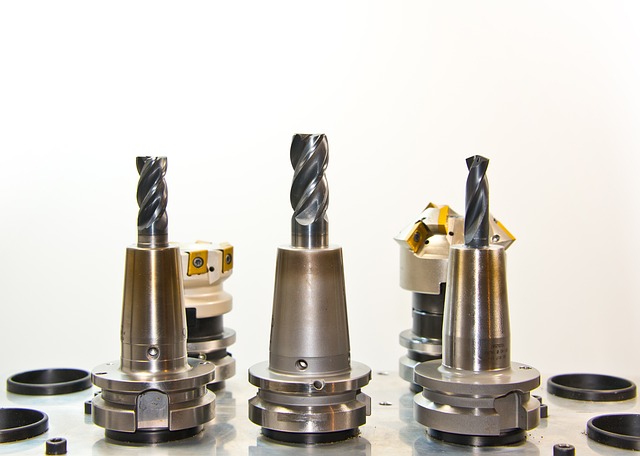
Defining the 5-axis Framework in CNC Machining
The 5-axis concept at its core refers to a CNC machine’s ability to control movement along five independent axes simultaneously: three linear (X, Y, Z) and two rotational (typically labeled A, B, or C). These rotational axes enable the cutting tool or workpiece to tilt and rotate, allowing the machine to approach parts from any angle. For example, an A-axis rotation tilts the tool around the X-axis, while a B-axis rotation tilts it around the Y-axis. This configuration means a 5-axis CNC machine can position the tool to machine complex surfaces that would be inaccessible on a 3-axis setup, such as undercuts, deep cavities, or multi-sided features in a single operation.
The Mechanics Behind 5-axis Movement
To understand the 5-axis concept, it’s essential to visualize its mechanical implementation. Most 5-axis CNC machines use one of two configurations: table-type or head-type. In table-type machines, the workpiece sits on a rotating table (B-axis) that can tilt (A-axis), while the spindle moves along X, Y, Z. This is ideal for larger parts, like aircraft panels. Head-type machines, conversely, feature a spindle head that tilts and rotates, leaving the workpiece fixed—perfect for intricate components such as medical implants. The magic lies in the machine’s controller, which coordinates all five axes in real time, ensuring the tool maintains optimal cutting angles throughout the process.
5-axis vs. 3-axis: A Paradigm Shift in Machining Capability
The distinction between 5-axis and 3-axis CNC machines highlights the concept’s transformative power. Traditional 3-axis machining is limited to linear movements, meaning the tool can only approach the workpiece from perpendicular angles. This restricts it to parts with simple geometries and requires multiple setups for complex features. In contrast, the 5-axis concept allows the tool to tilt and rotate, enabling it to machine surfaces at any angle. For instance, machining a turbine blade’s airfoil shape on a 3-axis machine would involve numerous shallow passes and tool repositioning, whereas a 5-axis machine can follow the curve in one continuous motion, maintaining a perpendicular cutting edge and reducing cycle time.
Enabling Complex Geometry with 5-axis CNC Machines
The 5-axis concept fundamentally changes how engineers design and manufacture parts. It eliminates the constraints of linear-only machining, allowing for the creation of components with organic shapes, hidden features, and precise contours. Take a custom orthopedic implant, for example: its surface must mimic the patient’s anatomy while incorporating micro-textures for bone integration. A 5-axis CNC machine can carve these details in a single setup, whereas a 3-axis machine would struggle to access all surfaces without compromising precision. Similarly, in aerospace, 5-axis machining enables the production of engine casings with internal cooling channels and external mounting points, a task impossible on conventional machines.
The Role of Programming in the 5-axis Concept
Realizing the 5-axis concept requires advanced programming expertise. Engineers use specialized Computer-Aided Manufacturing (CAM) software to generate toolpaths that account for the additional rotational axes. Unlike 3-axis programming, 5-axis code must consider tool orientation, collision avoidance, and optimal cutting strategies. For example, when machining a deep cavity, the CAM software calculates how the tool should tilt to use a shorter, stiffer cutter, reducing vibration and improving surface finish. This programming complexity is offset by the concept’s benefits: parts that were once impossible to machine can now be produced with precision, and multi-step setups are replaced by efficient, single-operation workflows.
Industry Impact: Where the 5-axis Concept Thrives
The 5-axis concept has found critical applications in industries demanding innovation and precision. In aerospace, it’s essential for manufacturing turbine blades, where aerodynamic efficiency depends on seamless, contoured surfaces. Medical device manufacturers rely on it to create patient-specific implants that fit perfectly within the human body. Even in motorsports, 5-axis CNC machines produce lightweight, high-strength components like engine blocks with integrated fluid channels, giving race cars a competitive edge. The concept’s ability to bridge design creativity with manufacturing feasibility has made it a cornerstone of modern, high-tech production.
Conclusion
The 5-axis concept in CNC machining is more than a technological upgrade—it’s a reimagining of what manufacturing can achieve. By adding rotational movement to traditional linear axes, 5-axis CNC machines break free from geometric limitations, enabling the production of complex, high-precision parts in fewer setups. From aerospace engineering to medical innovation, this concept drives industries forward by turning ambitious designs into tangible realities. As CNC technology evolves, the 5-axis concept will continue to shape the future of manufacturing, proving that with the right blend of mechanics and programming, even the most intricate designs are within reach.


What Is 5-axis CNC Type
What Are the Benefits of 5-axis Machining
Related Article
Poor surface finish, inconsistent dimensions, vibration, or an unexpected stop doesn’t always mean something is wrong with your CNC lathe. Worn tooling, poor workholding, and unsuitable cutting parameters can cause many of the same symptoms.
Common problems and solutions for CNC lathes
How to Choose a CNC Lathe for Shaft Machining: A Guide to Types, Models, Materials, and Machining Capacity