
What Is The Difference Between Machine Tool And Machine Center
author: Yannis
2025-04-23


Cultivated in CNC Machine Industry for 20+ years.
Specializing in CNC Milling, Drilling, Turning, Tapping, and so on...
Self-created Brand LiSN for 10+ Years



What Is The Difference Between Machine Tool And Machine Center
In the dynamic realm of CNC (Computer Numerical Control) manufacturing, the terms “machine tool” and “machine center” are frequently used, yet they represent distinct concepts with unique characteristics. Understanding the difference between these two is crucial for professionals and enthusiasts alike, as it helps in choosing the right equipment for specific manufacturing tasks. This blog will delve into the key disparities between a machine tool and a machine center, exploring their definitions, functions, and applications.

Definitions and Basics
A machine tool is a broad term encompassing various devices used for shaping, cutting, or forming materials, typically metals. Traditional machine tools, such as lathes, mills, drills, and grinders, are designed to perform specific machining operations. For instance, a lathe rotates a workpiece while a cutting tool removes material to create cylindrical shapes, and a mill uses rotary cutters to remove material from a workpiece in a variety of ways. In the context of CNC, machine tools can be retrofitted with CNC control systems, transforming them into CNC machine tools. These CNC-enabled machine tools operate based on pre-programmed instructions, enhancing precision and automation compared to their manual counterparts.
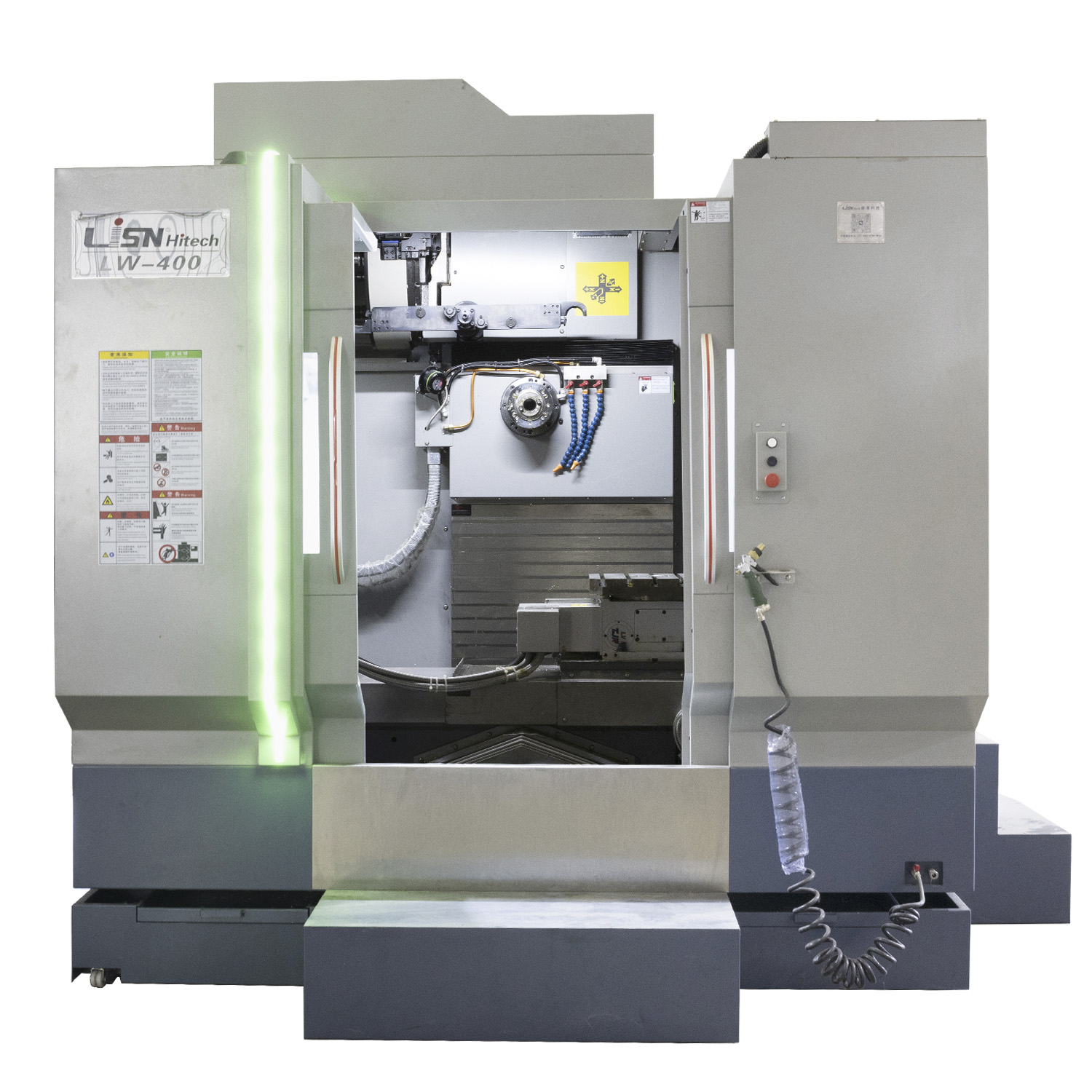
On the other hand, a machine center is a specialized and advanced type of CNC machine. It is engineered to perform multiple machining operations on a workpiece within a single setup. Machine centers integrate functions like milling, drilling, boring, tapping, and sometimes even more complex operations. They are equipped with features such as automatic tool changers (ATCs) and multi-axis configurations, which allow for seamless transitions between different machining tasks without the need to move the workpiece to different machines.

Function and Capability
The functionality of a traditional machine tool is often limited to one or a few related machining operations. For example, a drill press is mainly used for drilling holes, and it may have some basic capabilities for reaming or countersinking, but its scope is relatively narrow. Even when converted to a CNC machine tool, it still focuses on its primary operation, although with improved accuracy and repeatability due to the CNC control system.
Machine centers, however, excel in their versatility. Thanks to the ATC, a machine center can store and quickly access a wide variety of cutting tools. When the CNC program calls for a different operation, the ATC automatically changes the tool, enabling the machine to switch from milling a surface to drilling holes, and then to tapping threads, all in one continuous process. Additionally, the multi-axis configuration of machine centers (usually including X, Y, Z axes and sometimes additional rotary axes like A, B, or C) allows for the machining of complex 3D geometries that are difficult or impossible to achieve with single-function machine tools.

Structure and Design
Machine tools typically have a more straightforward structure designed around their specific function. A lathe, for example, has a bed, a headstock with a spindle to hold the workpiece, and a carriage that moves the cutting tool. The design prioritizes the efficient execution of its core operation. When upgraded to a CNC machine tool, additional components like servo motors, encoders, and a CNC controller are added to enable automated control, but the basic structure remains centered on its primary machining function.
Machine centers, in contrast, have a more complex and integrated structure. They feature a robust frame to support the multiple operations and the weight of various components. The ATC is an integral part of the structure, often mounted on the side or above the spindle. The worktable is designed to be highly stable and capable of moving along multiple axes with high precision. The CNC control system in a machine center is also more sophisticated, coordinating the movement of all axes, tool changes, and other functions simultaneously.

Automation and Control
While CNC machine tools offer a high level of automation, their operation is still somewhat limited by their single-function nature. They execute the programmed instructions for their specific machining task, but may require manual intervention for tasks such as tool changes (in some cases) or repositioning the workpiece for different operations.
Machine centers take automation to the next level. Once the workpiece is set up, the CNC program can control the entire machining process from start to finish, including all tool changes and complex multi-axis movements. The operator only needs to monitor the process and make adjustments if necessary. This high degree of automation not only increases productivity but also reduces the potential for human error during the machining process.

Application Scenarios
Machine tools are widely used in various manufacturing scenarios where specific operations need to be performed. Small-scale workshops may use manual or CNC lathes to produce simple cylindrical parts, and drill presses are commonly found in many manufacturing environments for creating holes. In mass-production lines, dedicated CNC machine tools can be used to efficiently produce large quantities of parts with a single type of operation.
Machine centers are particularly suitable for industries that require the production of complex parts. In the aerospace industry, machine centers are used to machine intricate components like turbine blades and aircraft structural parts. The mold and die-making industry also relies heavily on machine centers to produce molds with complex geometries and high precision. They are also ideal for prototyping, where the ability to perform multiple machining operations on a single setup quickly can significantly reduce production time.

Cost and Investment
Machine tools, especially basic manual ones, generally have a lower initial cost. Even when upgraded to CNC machine tools, the investment is often more affordable compared to machine centers. This makes them accessible for small-scale manufacturers or businesses with limited budgets. However, for more advanced CNC machine tools with high-end features, the cost can increase significantly.
Machine centers, due to their advanced capabilities, complex structure, and high-level automation, come with a higher price tag. The cost includes not only the machine itself but also the investment in CNC control systems, CAD/CAM software for programming, and operator training. Despite the higher upfront cost, machine centers can offer long-term cost savings in industries where they are used for high-volume production of complex parts, as they reduce production time and labor costs.

Conclusion
In summary, while both machine tools and machine centers play vital roles in CNC manufacturing, they have significant differences in terms of definition, function, structure, automation, application, and cost. Machine tools are the foundation of machining, specializing in specific operations, while machine centers represent the pinnacle of CNC technology, offering versatility and high-level automation for complex manufacturing tasks. Understanding these differences is essential for making informed decisions in the world of manufacturing, ensuring that the right equipment is chosen to meet production requirements efficiently and effectively.


What Is The Difference Between CNC And Lathe
What Are The Components of A Machining Center
Related Article

Poor surface finish, inconsistent dimensions, vibration, or an unexpected stop doesn’t always mean something is wrong with your CNC lathe. Worn tooling, poor workholding, and unsuitable cutting parameters can cause many of the same symptoms.
Common problems and solutions for CNC lathes

How to Choose a CNC Lathe for Shaft Machining: A Guide to Types, Models, Materials, and Machining Capacity

