What Is The Principle of CNC Lathe
author: Yannis
2025-04-09

Cultivated in CNC Machine Industry for 20+ years.
Specializing in CNC Milling, Drilling, Turning, Tapping, and so on...
Self-created Brand LiSN for 10+ Years



What Is The Principle of CNC Lathe
In the dynamic world of modern manufacturing, CNC (Computer Numerical Control) technology has emerged as a game-changer. Among the various CNC machines, the CNC lathe stands out for its precision and efficiency in machining cylindrical workpieces. Understanding the principle of a CNC lathe is essential for both industry professionals and those new to the field. This blog will delve into the inner workings of CNC lathes, exploring how they operate and revolutionize the machining process.
The Foundation: CNC Technology
At the heart of a CNC lathe is CNC technology. CNC machines are automated tools that operate based on pre-programmed instructions. These instructions are typically written in a specialized language, such as G-code. Instead of relying on manual operation to control the movement of cutting tools, a CNC system precisely guides the machine’s axes. This eliminates human error and allows for highly accurate and repeatable machining operations.
The Programming Process
Creating the CNC Program
The first step in using a CNC lathe is creating the CNC program. This involves translating the design of the workpiece into a set of instructions that the machine can understand. CAD (Computer-Aided Design) software is often used to create a 3D model of the part. Then, CAM (Computer-Aided Manufacturing) software is employed to generate the G-code program based on the CAD model. The G-code program defines the tool paths, spindle speeds, feed rates, and other machining parameters.
Inputting the Program
Once the G-code program is generated, it is transferred to the CNC controller of the lathe. This can be done through various means, such as a USB drive, Ethernet connection, or direct input into the machine’s control panel. The CNC controller reads the program and interprets the instructions.
How the CNC Lathe Operates
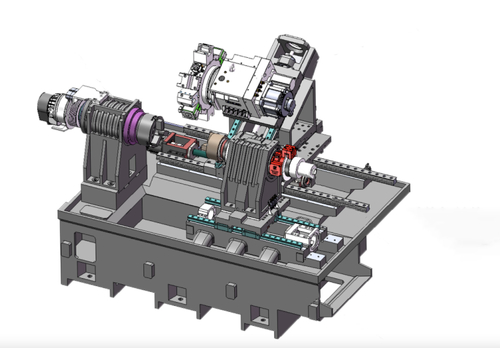
Spindle Rotation
The spindle is a crucial component of the CNC lathe. It holds the workpiece and rotates it at high speeds. The CNC controller adjusts the spindle speed according to the programmed instructions. For example, when machining a soft material like aluminum, a higher spindle speed may be set to increase the material removal rate. In contrast, when working with a harder material such as steel, a lower spindle speed is used to prevent overheating and tool wear.
Tool Movement
The CNC lathe has multiple axes that control the movement of the cutting tool. The most common axes are the X, Z, and sometimes Y axes. The X-axis controls the cross-feed movement of the tool, the Z-axis controls the longitudinal movement, and the Y-axis (if present) allows for additional complex machining operations. The CNC controller sends signals to the servo-motors connected to each axis, precisely positioning the cutting tool relative to the rotating workpiece. This enables the creation of various shapes, such as cylindrical surfaces, tapers, threads, and grooves.
Tool Changing
Many CNC lathes are equipped with an automatic tool changer (ATC). The ATC allows for quick and seamless tool changes during the machining process. The CNC program can specify when a tool change is required, and the ATC will select the appropriate tool from the tool magazine and mount it on the tool holder. This feature is especially useful when multiple machining operations, such as turning, drilling, and threading, need to be performed on the same workpiece.
Real-World Applications
Automotive Industry
In the automotive industry, CNC lathes are used to machine a wide range of components, including engine shafts, transmission gears, and brake components. The high precision and repeatability of CNC lathes ensure that these components meet the strict quality standards of the automotive industry. For example, CNC lathes can produce engine shafts with tight tolerances, ensuring smooth operation and reduced vibration in the engine.
Aerospace Industry
The aerospace industry demands the highest level of precision and quality. CNC lathes are used to machine critical components such as turbine shafts, compressor disks, and aircraft landing gear parts. The ability of CNC lathes to produce complex geometries with micron - level accuracy is essential for the performance and safety of aircraft.
Medical Device Manufacturing
In medical device manufacturing, CNC lathes play a crucial role in producing components for surgical instruments, orthopedic implants, and diagnostic equipment. The precise machining capabilities of CNC lathes are vital for ensuring the safety and effectiveness of these medical devices. For instance, CNC lathes can create the intricate shapes and surfaces of orthopedic implants, improving their fit and functionality.

Conclusion
The principle of a CNC lathe is based on the integration of advanced CNC technology, precise programming, and automated control of machine components. By understanding how CNC lathes operate, manufacturers can take full advantage of their capabilities to produce high-quality, precision-machined parts. Whether in the automotive, aerospace, or medical device industry, CNC lathes continue to drive innovation and efficiency in modern manufacturing.
How Do You Explain What CNC Is
What Is The Advantage of Manual Lathe
Related Article
Poor surface finish, inconsistent dimensions, vibration, or an unexpected stop doesn’t always mean something is wrong with your CNC lathe. Worn tooling, poor workholding, and unsuitable cutting parameters can cause many of the same symptoms.
Common problems and solutions for CNC lathes
How to Choose a CNC Lathe for Shaft Machining: A Guide to Types, Models, Materials, and Machining Capacity