Why Is It Called The 5-axis
author: Yannis
2025-05-30

Cultivated in CNC Machine Industry for 20+ years.
Specializing in CNC Milling, Drilling, Turning, Tapping, and so on...
Self-created Brand LiSN for 10+ Years



Why Is It Called The 5-axis
In the realm of CNC (Computer Numerical Control) manufacturing, the term "5-axis" often surfaces when discussing advanced machining technologies. But have you ever wondered why it’s called the 5-axis? The answer lies in the fundamental mechanics of CNC machines and how they move to create complex parts. This blog demystifies the nomenclature behind 5-axis machining, exploring the significance of each axis and why this technology has become a cornerstone of modern manufacturing.
The Foundation: Understanding Axes in CNC Machining
To grasp why it’s called the 5-axis, it’s essential to first understand what an "axis" represents in CNC machining. In simple terms, an axis refers to a direction in which a CNC machine can move. Traditional 3-axis CNC machines operate along three linear axes:
- The X-axis controls left-to-right movement,
- The Y-axis controls forward-to-backward movement,
- The Z-axis controls up-to-down movement.
These three axes enable the machine to create basic 3D shapes, but they’re limited to machining surfaces that are perpendicular to the tool’s orientation. The introduction of two additional axes—rotational rather than linear—transforms the capability of CNC machines, giving rise to the term "5-axis."
The Two Additional Axes: Adding Rotational Movement
So, why is it called the 5-axis? The name stems from the machine’s ability to move along five independent axes: three linear (X, Y, Z) and two rotational. These rotational axes allow the cutting tool or workpiece to tilt and rotate, enabling the machine to access angles and geometries that are impossible with linear movement alone.
The rotational axes in 5-axis CNC machines are typically designated as A, B, or C:
- The A-axis rotates around the X-axis, tilting the tool or workpiece up and down,
- The B-axis rotates around the Y-axis, tilting the tool or workpiece left and right,
- The C-axis rotates around the Z-axis, spinning the tool or workpiece in a full circle.
Depending on the machine’s design, it may use an A and B axis, a B and C axis, or another combination, but the total number of controllable axes—three linear plus two rotational—adds up to five, hence the name "5-axis."
How 5-axis Movement Redefines Machining Capability
The reason behind the "5-axis" name becomes clearer when considering the technology’s impact on manufacturing. Unlike 3-axis CNC machines, which can only approach the workpiece from perpendicular angles, 5-axis machines use their two rotational axes to tilt and rotate the tool or workpiece. This allows the cutting tool to maintain an optimal angle relative to the workpiece surface throughout the machining process, even on complex, curved, or multi-sided parts.
For example, machining a turbine blade for a jet engine requires following its airfoil shape, which features continuous curves and tight tolerances. A 5-axis CNC machine can tilt the tool along the A-axis and rotate it along the B-axis while moving along X, Y, Z, ensuring the cutting edge stays perpendicular to the blade’s surface at every point. This level of movement coordination is only possible with five axes, hence the designation.
The Significance of the Name in Manufacturing Contexts
The term "5-axis" isn’t just a technical label; it’s a marker of capability of CNC machines. When manufacturers refer to 5-axis machining, they’re highlighting the ability to:
- Machine undercuts and hidden features without repositioning the workpiece,
- Create complex, organic shapes in a single setup,
- Achieve tighter tolerances and better surface finishes,
- Reduce production time by eliminating multiple setups.
Each of these capabilities is directly tied to the machine’s five-axis movement: the three linear axes handle spatial positioning, while the two rotational axes enable the tool to adapt to the part’s geometry. Without these five axes working in tandem, producing intricate parts for aerospace, medical, or high-performance industries would be far more challenging, if not impossible.
Common Misconceptions About the 5-axis Nomenclature
One common question arises: why isn’t it called "5-axis movement" instead of "5-axis"? The answer lies in the standard terminology of CNC machining, where "axis" refers to the fundamental directions of movement a machine can control. A 5-axis CNC machine is defined by its ability to control five axes of movement, regardless of whether those axes are linear or rotational. This naming convention helps distinguish between different machine types—such as 3-axis, 4-axis, or 5-axis—based on their movement capabilities.
Another misconception is confusing "5-axis" with "5-axis simultaneous machining." While simultaneous 5-axis machining is a specific technique that uses all five axes at the same time, the term "5-axis" itself simply refers to the machine’s number of controllable axes, regardless of whether they’re used simultaneously or sequentially.
Conclusion: The Name as a Marker of Technological Advancement
In essence, the term "5-axis" in CNC machining is a direct reference to the five independent axes of movement that a CNC machine can control: three linear (X, Y, Z) and two rotational (A, B, or C). This naming convention succinctly captures the technology’s defining feature: the ability to move in five directions to create complex parts with unprecedented precision. From aerospace components to medical implants, the name "5-axis" has become synonymous with innovation in manufacturing, representing a leap forward from traditional 3-axis capabilities. As CNC machines continue to evolve, the term remains a clear indicator of a machine’s capacity to tackle the most demanding machining challenges.


What Is 5-axis CNC Geometry
What Is 5-axis Machining
Related Article
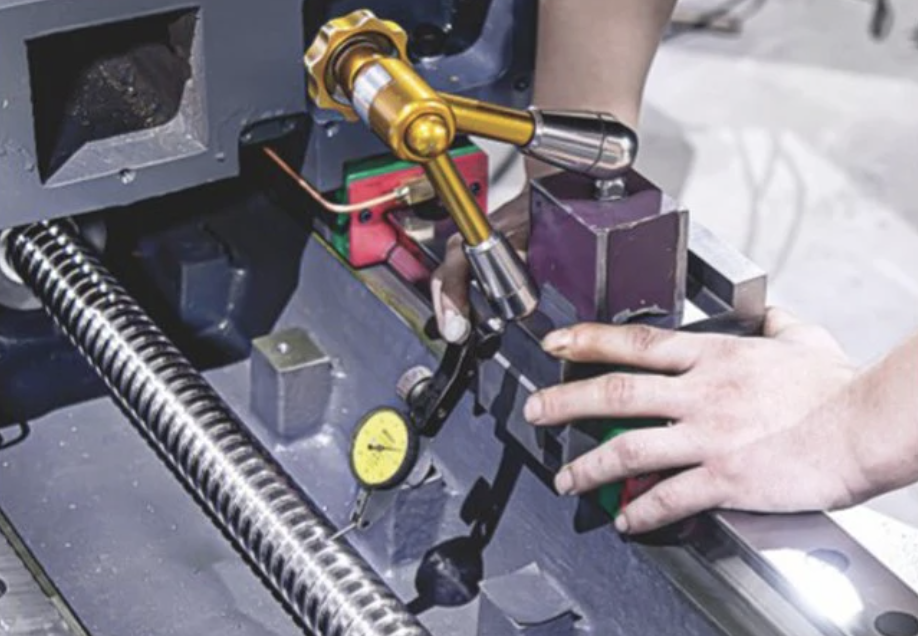
Poor surface finish, inconsistent dimensions, vibration, or an unexpected stop doesn’t always mean something is wrong with your CNC lathe. Worn tooling, poor workholding, and unsuitable cutting parameters can cause many of the same symptoms.
Common problems and solutions for CNC lathes
How to Choose a CNC Lathe for Shaft Machining: A Guide to Types, Models, Materials, and Machining Capacity